2026 AI Predictions: What to Expect in the Next Wave of Innovation
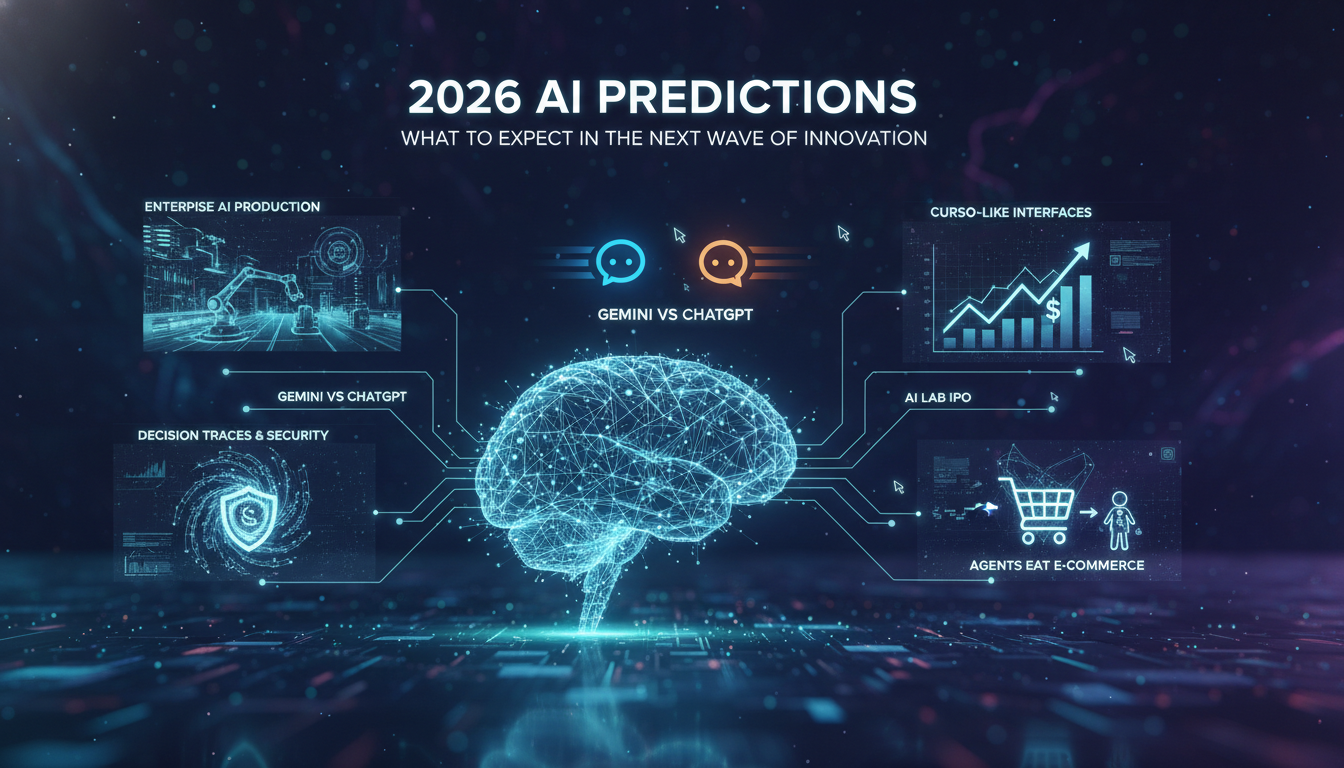
2026 AI Predictions: What to Expect in the Next Wave of Innovation
As we move into 2026, the trajectory of artificial intelligence continues to pique the interest of technologists, entrepreneurs, and investors. The AI landscape is evolving at breakneck speed, with new advancements and applications emerging that promise to redefine industries and reshape our daily lives. In this article, we delve into key predictions for AI in 2026, exploring the technological breakthroughs and industry shifts that are set to have a significant impact.
Enterprise AI Finally Hits Production
For years, enterprise AI has been on the cusp of widespread adoption, hindered by complexities in integrating AI systems into existing workflows. In 2026, this is poised to change as startups and established companies alike begin to move beyond pilot projects and into full-scale deployment. The focus will be on embedding AI agents within enterprise environments to handle real-world workflows, not just to generate outputs but to execute tasks end-to-end.
This shift will be driven by the need for AI systems to understand the nuances of work processes, which are often scattered across disparate tools and systems. Startups that excel in this area will work closely with enterprises to create customized AI models that operate efficiently within their unique infrastructure. This approach not only enhances performance but also addresses critical security and privacy concerns, as sensitive data remains on-premises.
Decision Traces as the New Data Moat
As AI systems become more integrated into decision-making processes, the concept of capturing decision traces will gain traction. When AI agents execute tasks, they generate valuable data about the decision-making process, including inputs, rules applied, and exceptions granted. This creates a "context graph," a structured history that enterprises can use to better understand and optimize their operations.
Startups have a distinct advantage in this area, as they can capture decision traces directly from the execution path. This provides them with insights that incumbents, often siloed or operating on outdated data capture models, cannot access. By leveraging decision traces, companies can continuously improve their AI systems, making them more efficient and effective over time.
AI-Related Security Issues Take Center Stage
With AI agents becoming integral to business operations, the security landscape is set to undergo significant changes. These agents, which now hold sensitive operational logic, present new security challenges that traditional frameworks are ill-equipped to handle. In 2026, AI security will become a critical focus, with zero-trust principles applied to ensure that AI systems operate within strict security parameters.
Expect to see a rise in AI-specific security startups addressing these needs, as well as increased scrutiny from enterprises and regulators. The potential for significant security incidents involving AI agents will drive this trend, highlighting the need for robust security measures to protect against unauthorized access and manipulation.
SaaS Incumbents Fight Back
The rise of AI-native startups has put pressure on traditional SaaS companies, prompting them to integrate AI more deeply into their offerings. In 2026, we can expect incumbents to assert more control over their ecosystems, tightening access to data and imposing stricter conditions on third-party integrations. This defensive strategy aims to retain market share and protect against the encroachment of AI-driven competitors.
For startups, this environment presents challenges and opportunities. Navigating the increasingly complex landscape will require innovative approaches to data access and integration. Those able to position themselves as indispensable partners to large SaaS platforms will have a strategic advantage.
Agents Eat E-Commerce
The fusion of AI with e-commerce is set to revolutionize the consumer shopping experience. As AI becomes more adept at understanding consumer preferences, agents will take on a more active role in the purchasing process. This will shift the focus from traditional search-driven discovery to agent-driven transactions, where AI systems execute purchases on behalf of consumers.
This transformation will challenge existing business models, particularly for aggregators and other intermediaries. Brands will need to adapt their strategies to appeal to AI agents, potentially creating new monetization opportunities through partnerships and commissions.
Gemini Overtakes ChatGPT
In 2026, we anticipate a shift in the competitive landscape of AI chatbots, with Google's Gemini poised to overtake OpenAI's ChatGPT in terms of user adoption. Google's strategic integration of Gemini across its product suite, including Search, Chrome, and Android, provides a seamless user experience that is difficult for competitors to match.
As consumer usage patterns evolve, convenience and accessibility will drive AI adoption. This shift will signal a move towards a more diversified AI ecosystem, where multiple players compete for user attention and engagement.
An AI Lab Goes Public
The financial demands of advancing AI technology are pushing leading AI labs towards public markets. In 2026, we expect to see at least one major AI lab file for an IPO, seeking the capital required to sustain their ambitious growth trajectories. This move will not only provide a significant infusion of funds but also subject these companies to the scrutiny of public markets, which may impact their strategic decisions and focus.
Cursor-like Interfaces Become the Default
The limitations of traditional chatbot interfaces are prompting a shift towards more integrated AI experiences. By 2026, AI tools that seamlessly blend into existing workflows will become the norm, moving beyond the standalone chatbot model. These "Cursor-like" interfaces will provide context-aware assistance directly within applications, reducing friction and enhancing productivity.
As AI continues to evolve, these predictions highlight the transformative potential of the technology across industries. The next few years will undoubtedly bring exciting developments and challenges, as AI systems become increasingly embedded in the fabric of our digital world.