AI's Domino Effect: How Automation is Toppling Industries One by One
AI's Domino Effect: How Automation is Toppling Industries One by One
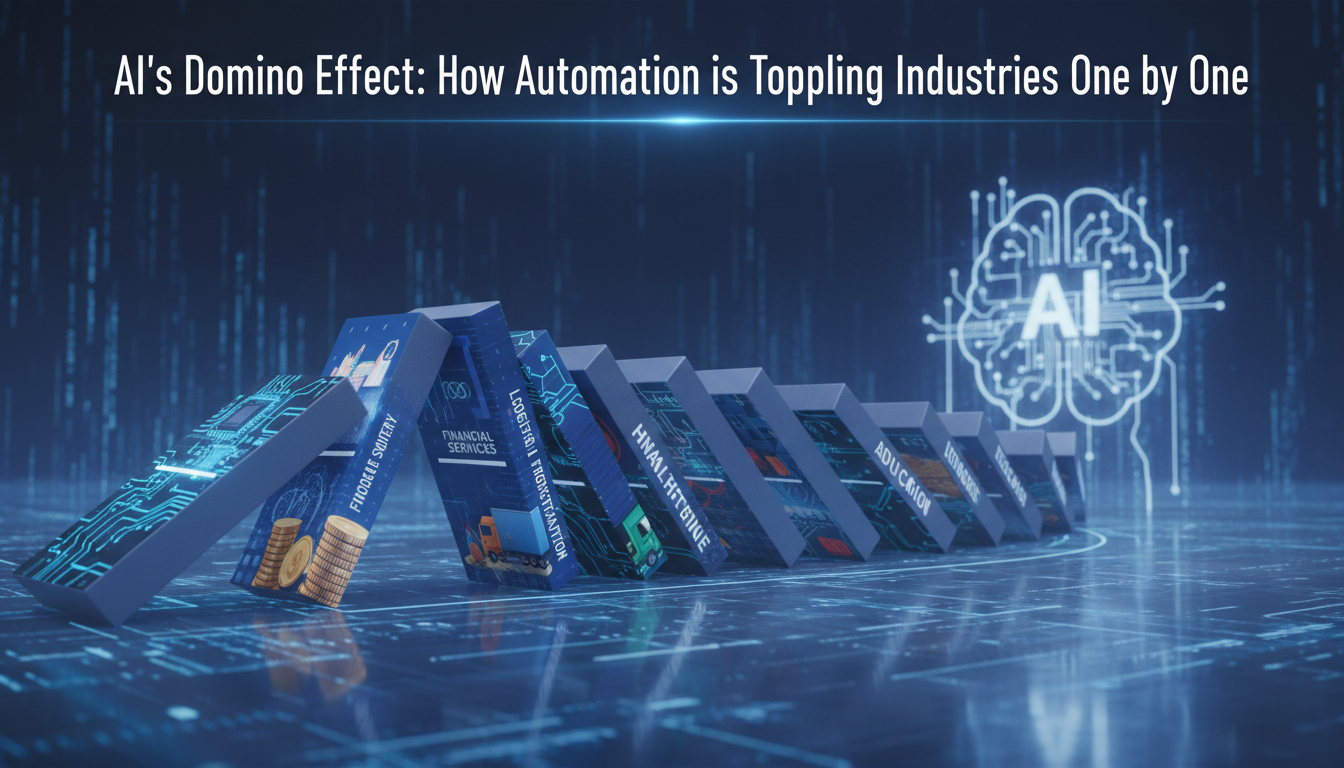
The rapid advancement of artificial intelligence (AI) is not just a technological marvel; it is a transformative force reshaping industries at an unprecedented pace. Over the past few years, AI has moved from being an auxiliary tool to a core component that directly impacts how industries operate, compete, and sustain their business models. This article delves into how AI is triggering a domino effect across various sectors, causing shifts and disruptions that are both profound and far-reaching.
Software Industry: The First Domino
The software industry was among the first to feel the seismic tremors of AI's infiltration. Traditionally reliant on recurring revenue from subscriptions and software licenses, many companies found themselves scrambling as AI technologies began to integrate more deeply into core application layers. This integration threatened existing business models that were heavily dependent on workflow integration and user subscriptions.
With AI tools now capable of automating complex processes and enhancing operational efficiencies, the perceived value of traditional software solutions faced scrutiny. Investors, wary of the potential erosion of profit margins and the rise of AI as a direct competitor, reacted by recalibrating their market positions, leading to a notable selloff in software stocks.
Financial Services: A New Era of Automation
Following the software industry's shake-up, the financial services sector experienced its own bout of AI-induced volatility. Wealth management and brokerage firms, which have long thrived on advisory services and personalized client interactions, found themselves in the AI spotlight. The introduction of AI-powered platforms capable of generating tailored tax strategies and financial plans within minutes posed a direct challenge to traditional advisory roles.
AI's ability to process vast amounts of financial data quickly and accurately raised investor concerns about the future of fee-based advisory services. The market's reaction was swift, with stocks of major brokerage firms experiencing significant declines. The underlying anxiety revolved around the potential for AI to compress advisory fees and redefine how financial services are delivered.
Logistics and Transportation: Rerouting the Industry
The logistics and transportation sector, a cornerstone of global commerce, was next in line. AI innovations in this space have focused heavily on optimizing operations, with AI-driven freight software reducing empty miles and improving truck utilization rates drastically. The implications for traditional logistics companies, reliant on human brokers and coordinators, were clear.
AI's promise of increased efficiency and reduced operational costs prompted investors to reevaluate the long-term viability of existing business models within the sector. The resulting market adjustments reflected a growing belief that AI could significantly diminish the role of intermediaries, thereby reshaping the logistics landscape.
Investor Sentiment and Market Reactions
The reaction across these industries highlights a critical aspect of AI's impact: investor sentiment. The rapid sequence of AI advancements and product launches triggered a wave of market volatility, as stakeholders reassessed the potential for AI to disrupt revenue models heavily reliant on human coordination and labor.
Despite the lack of immediate revenue declines directly attributed to AI, the market's response underscores a broader narrative. Investors are not only assessing current performance but are also speculating on future shifts that AI might bring. This forward-looking perspective is driving a reevaluation of how industries will need to adapt to maintain their competitive edge.
The Future of Coordination-Heavy Industries
As AI continues to evolve, industries that depend heavily on coordination and service labor must navigate a landscape where automation increasingly dictates operational success. The integration of AI into core business functions is not just a technological upgrade; it is a strategic necessity that will define future business models.
Companies must embrace AI not just as a tool but as a pivotal component that can enhance or even redefine their operational strategies. As AI technologies mature, the pressure will mount on traditional business models to adapt or risk obsolescence.
In conclusion, AI's domino effect across industries serves as a reminder of the transformative power of technology. Those industries that swiftly adapt to leverage AI's capabilities will likely emerge as leaders, while those that resist change may find themselves struggling to keep pace in a rapidly evolving market landscape. The challenge lies in recognizing AI not as a threat, but as an opportunity to innovate and thrive in a new era of industrial evolution.