Bridging the Gap: Seamlessly Integrating OpenClaw with Legacy Enterprise Systems
Bridging the Gap: Seamlessly Integrating OpenClaw with Legacy Enterprise Systems
The integration of AI systems like OpenClaw into legacy enterprise environments presents a complex challenge for organizations. The primary hurdle isn't the AI itself but the outdated infrastructure that underpins it. This article explores how OpenClaw’s agentic model successfully bridges these systems, offering a practical approach without the need for immediate modernization.
The Challenge of Legacy Systems
Legacy systems are the backbone of many enterprises, encompassing everything from outdated SAP instances to custom-built CRMs. These systems, while critical, are not designed for rapid evolution or seamless AI integration. They often lack public APIs, have rigid schemas, and are encumbered by vendor lock-in, making them challenging to adapt to modern AI-driven demands.
Redefining Integration Architecture
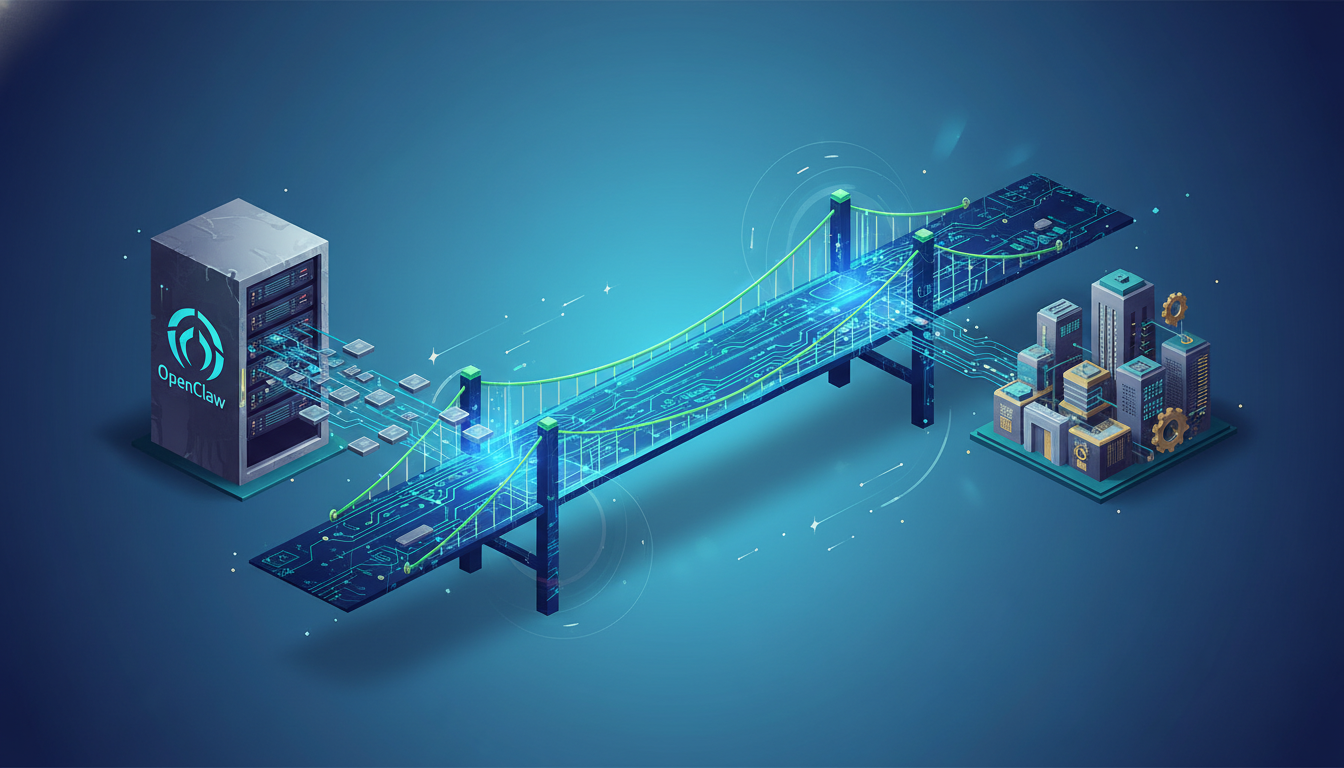
Traditional integration approaches rely on connecting systems via their data layers, utilizing APIs and middleware to facilitate communication. However, the agentic model employed by OpenClaw offers a transformative alternative. Instead of interfacing through data layers, OpenClaw engages with the behavioral layers of legacy systems—the same layers human operators use. This shift allows for integration without altering the underlying systems.
Traditional vs. Agentic Integration Models
-
Traditional Integration Model:
- Relies on stable APIs and middleware.
- Requires extensive plumbing and maintenance.
- Suitable for modern systems with robust API support.
-
Agentic Integration Model:
- Operates through user interfaces, mimicking human interaction.
- Requires no changes to existing systems.
- Ideal for legacy environments with limited API availability.
Effective Integration Strategies
Strategy A: Browser-Based Automation
For systems without APIs or with fragile schemas, browser-based automation offers a practical solution. OpenClaw interacts with web interfaces directly, completing tasks as a human would. While this approach is less robust than API-based integration, it provides a quick path to incorporating legacy systems into AI workflows without extensive modifications.
Strategy B: Skill-Based Extensibility
OpenClaw extends its capabilities through a skill-based model, where each skill is a task-specific module allowing agents controlled access to systems. This approach supports enterprise governance, ensuring skills are reviewed, approved, and securely deployed.
Strategy C: Local-First Processing
In sectors where data cannot leave the organization's perimeter, local-first processing ensures that all AI operations occur within controlled environments. This approach is crucial for industries like healthcare and finance, where data sovereignty is non-negotiable.
Strategy D: Gateway Integration
By leveraging existing communication platforms like Slack or Microsoft Teams, OpenClaw integrates seamlessly into the workflow, allowing employees to interact with AI agents through familiar channels. This integration simplifies operations and enhances productivity.
Microservices and API Orchestration Patterns
To coordinate complex workflows across multiple systems, several architectural patterns are employed:
- Agent-as-Orchestrator: The agent coordinates existing microservices and APIs, ensuring seamless workflow execution.
- Hybrid Integration Fabric: Combines modern API integration with legacy system automation, offering a unified workflow experience.
- AI as the Control Plane: Positions the AI layer as the central orchestration hub, streamlining decision-making and task execution.
Security and Governance Considerations
A successful AI integration hinges on robust security and governance frameworks. OpenClaw deployments should operate within sandboxed environments with strict access controls. Skills must undergo rigorous review processes to prevent unauthorized access or data breaches. Continuous monitoring and audit capabilities are essential to maintain compliance and security.
Navigating Potential Pitfalls
While agentic integration offers significant advantages, it is not without risks. Autonomous behavior in critical workflows can lead to costly errors if not properly managed. Additionally, the skill supply chain presents potential security vulnerabilities if not diligently controlled. Governance gaps can result in unsanctioned deployments, undermining compliance efforts.
Conclusion: Bridging, Not Replacing
The future enterprise stack will not replace legacy systems but will bridge them, enabling participation in modern AI workflows. OpenClaw’s agentic model offers a viable pathway, integrating without disruption and providing the agility needed to thrive in today’s digital landscape. By focusing on architecture, governance, and security, enterprises can successfully navigate the complexities of AI integration and unlock new levels of operational efficiency.