Bridging the Language AI Gap: Why 83% of Enterprises Are Still Behind
Bridging the Language AI Gap: Why 83% of Enterprises Are Still Behind
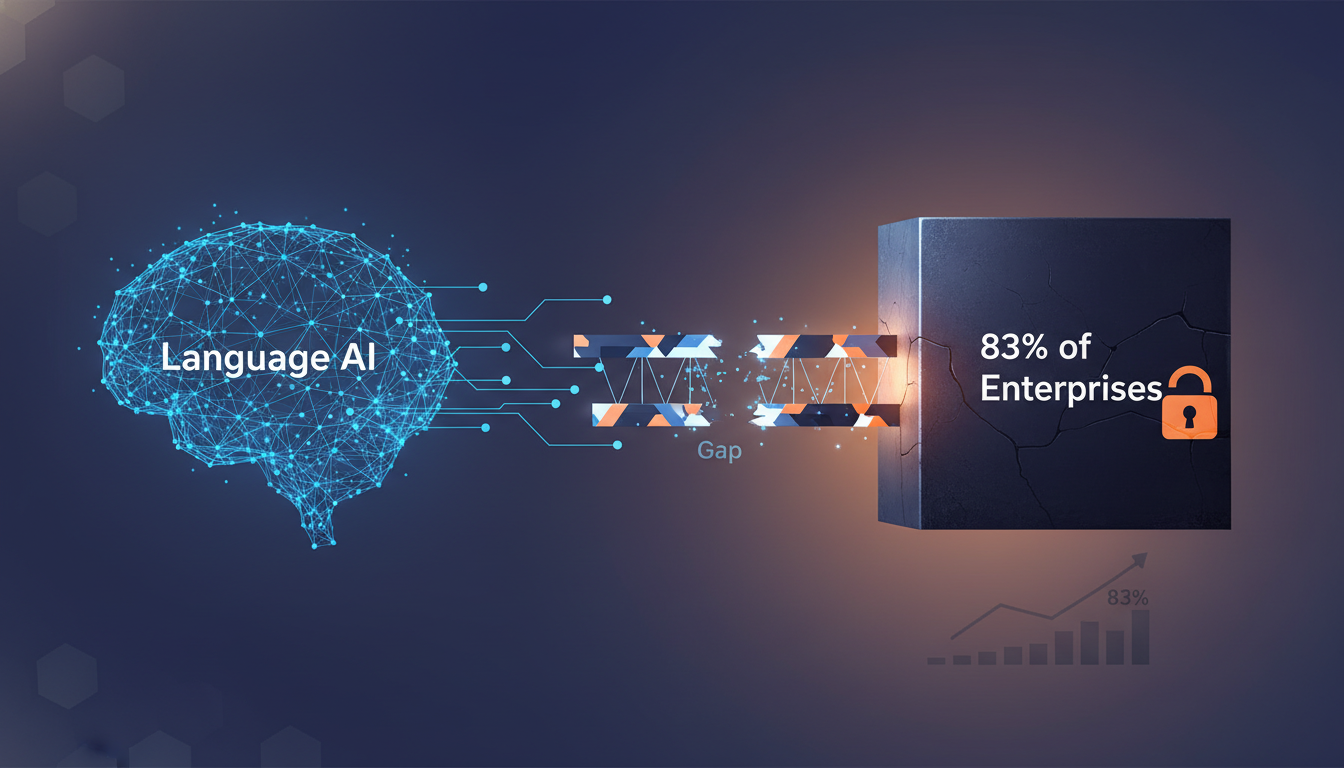
In today's rapidly evolving technological landscape, artificial intelligence (AI) has become a cornerstone of enterprise innovation. From customer service chatbots to predictive analytics, AI is reshaping how businesses operate. However, despite this widespread adoption, a significant gap remains in the realm of language AI. According to DeepL's "Borderless Business" report, an astonishing 83% of enterprises have yet to fully embrace modern language AI technologies. This article explores the reasons behind this discrepancy and why bridging this gap is crucial for future business success.
The Automation Gap: A Persistent Challenge
DeepL's report highlights a glaring automation gap within enterprises, particularly concerning language operations. While AI has been integrated into various business functions, language translation and multilingual workflows are lagging. The data reveals that 35% of international businesses still rely entirely on manual translation processes. An additional 33% use basic automation tools supplemented by human review. This leaves only 17% of enterprises using cutting-edge AI technologies such as large language models to handle multilingual tasks.
This gap poses a significant challenge as global content volume has surged by 50% since 2023. Yet, the majority of companies continue to depend on outdated workflows that are ill-suited to handle the demands of modern business operations.
The Importance of Language AI as Infrastructure
Language AI is not just about translation; it's becoming a critical infrastructure component for businesses aiming for global expansion. DeepL's research indicates that the primary driver for language AI investment is global expansion, accounting for 33% of the focus, followed by sales and marketing, customer support, and legal and finance. These areas are vital for business growth and require efficient language solutions to operate effectively across diverse markets.
Real-time voice translation is also gaining traction, with 54% of global executives considering it essential for 2026, a marked increase from 32% today. This trend underscores the growing importance of language AI in facilitating seamless international operations.
Sovereignty and Security: Key Considerations
For enterprises in regulated industries such as finance, healthcare, and government, data sovereignty and security are paramount. DeepL distinguishes itself in this domain by offering robust security features, including ISO 27001, SOC 2 Type 2, and GDPR certifications. Their Bring Your Own Key encryption allows organizations to maintain control over their data, ensuring compliance and security in sensitive environments.
The ability to withdraw data access instantly provides a level of control and trust that many large language model providers cannot match. This security assurance is crucial for enterprises looking to integrate AI while adhering to strict regulatory requirements.
The Transition to Agentic AI
The year 2026 is projected to be a turning point for AI deployment in enterprises. DeepL's "Borderless Business" report suggests that businesses are moving from experimentation to execution, with agentic AI at the forefront. DeepL's recent product, DeepL Agent, exemplifies this shift by enabling autonomous workflow execution across various business systems without requiring complex integrations.
This transition is poised to transform how companies handle multilingual operations, making them more efficient and scalable. As businesses prioritize AI-driven workflow transformation, the gap between aspiration and implementation presents a significant opportunity for growth and innovation.
Conclusion: The Path Forward
The gap in language AI adoption presents both a challenge and an opportunity for enterprises. As global markets become increasingly interconnected, the ability to communicate and operate seamlessly across languages is no longer a luxury but a necessity. Bridging this gap will require a concerted effort to integrate modern AI technologies into multilingual workflows, ensuring that businesses remain competitive in a globalized economy.
By addressing the security concerns and focusing on agentic AI, enterprises can unlock new levels of efficiency and productivity. With 71% of business leaders prioritizing AI-driven workflow transformation, the time is ripe for enterprises to reevaluate their language operations strategy and embrace the future of language AI.