Citi's AI Revolution: Empowering 4,000 Employees to Transform the Workplace
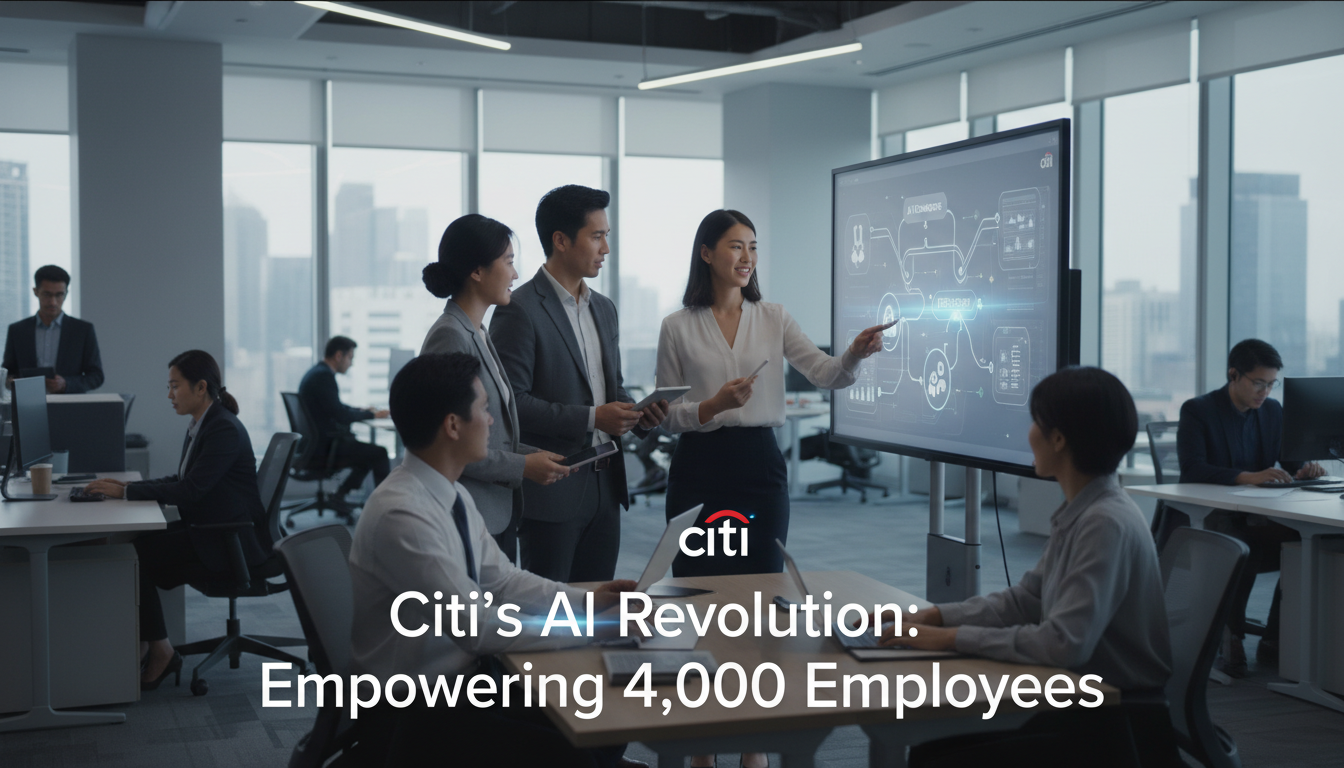
Citi's AI Revolution: Empowering 4,000 Employees to Transform the Workplace
In an era where artificial intelligence (AI) is reshaping industries, Citi has emerged as a pioneer by integrating AI into the core of its operations. This effort is not confined to small teams or isolated projects. Instead, Citi has embarked on a comprehensive journey to democratize AI across its workforce. By empowering 4,000 employees, the bank is not only enhancing operational efficiency but also setting a precedent for how large enterprises can harness AI effectively.
From Central Pilots to Team-Level Adoption
Citi's approach to AI is transformative. Unlike many large corporations where AI initiatives remain siloed, Citi has focused on integrating AI into daily workflows. This shift began with the creation of its "AI Champions" and "AI Accelerators" programs. These initiatives invite employees to become advocates and practitioners of AI within their respective teams. By equipping them with the necessary training and tools, Citi has enabled these champions to facilitate AI adoption at the grassroots level.
The strategy of embedding AI expertise within teams addresses a common hurdle faced by many organizations: the disconnect between innovative tools and practical application. By creating local points of contact, Citi has minimized this gap, ensuring that AI tools are not just available but are actively utilized in everyday tasks. This peer-driven model has proven more effective than traditional top-down mandates, fostering a culture of innovation and continuous improvement.
Everyday Use, With Guardrails
Citi's leadership has been strategic in framing AI adoption as a means to scale efficiency rather than a mere novelty. By focusing on incremental improvements in areas such as document summarization, data analysis, and software development, the bank is reaping substantial benefits. These applications, while not groundbreaking individually, collectively contribute to significant operational gains.
However, with great power comes great responsibility. Citi has implemented firm-approved tools and established clear guidelines on data usage and output management. These guardrails ensure that AI deployment remains secure and compliant, particularly in the highly regulated finance industry. By prioritizing trust over speed, Citi has built a robust foundation for sustainable AI growth.
Lessons for Scaling AI in Enterprises
Citi's journey offers valuable insights for other organizations aspiring to scale AI. A key takeaway is the importance of widespread literacy over expertise. Rather than concentrating knowledge within a small group of specialists, Citi has empowered a wide base of employees to understand and apply AI responsibly. This democratization of knowledge reduces dependency on a limited pool of experts and fosters a culture where AI becomes an integral part of the work ecosystem.
Moreover, by encouraging participation from non-technical roles, Citi signals that AI is not exclusive to engineers or data scientists. This inclusivity parallels the adoption of earlier technological tools like spreadsheets, which became ubiquitous across functions. As AI increasingly becomes part of the organizational fabric, this cultural shift is crucial for long-term success.
Overcoming Challenges and Looking Ahead
Despite the progress, Citi's approach is not without challenges. The reliance on peer-led initiatives necessitates sustained enthusiasm and momentum, which can vary across teams. Additionally, informal support networks may lead to uneven adoption, with some teams advancing faster than others. To mitigate these issues, Citi has implemented strategies such as rotating AI Champions and updating training materials to keep pace with evolving technologies.
Citi's willingness to treat AI as essential infrastructure rather than a fleeting innovation is noteworthy. By focusing on reducing friction in existing processes, the bank has set realistic expectations and measurable goals. This pragmatic approach not only alleviates pressure to deliver dramatic results but also ensures consistent progress.
A Bottom-Up Approach to AI Adoption
One of the most compelling aspects of Citi's AI initiative is its bottom-up approach. While senior leadership supports the effort, much of the momentum is driven by employees who voluntarily engage with AI. This grassroots energy is often challenging to cultivate in large organizations but is critical for the longevity and success of technology adoption.
As more companies transition from pilot projects to full-scale AI implementation, Citi's experiment provides a valuable blueprint. The bank's experience underscores the importance of empowering people, not just acquiring tools. For enterprises wondering why AI progress feels stagnant, the answer may lie in fostering a culture where AI is a tool for empowerment, not just a technology to be managed.
In conclusion, Citi's AI revolution exemplifies how large organizations can successfully integrate AI into their operations. By prioritizing people, establishing clear guidelines, and fostering a culture of continuous learning, Citi has set a standard for AI adoption that others can aspire to emulate. As the landscape of work evolves, such initiatives will be pivotal in shaping the future of industries worldwide.