Disconnected Clouds: The Future of AI Data Governance
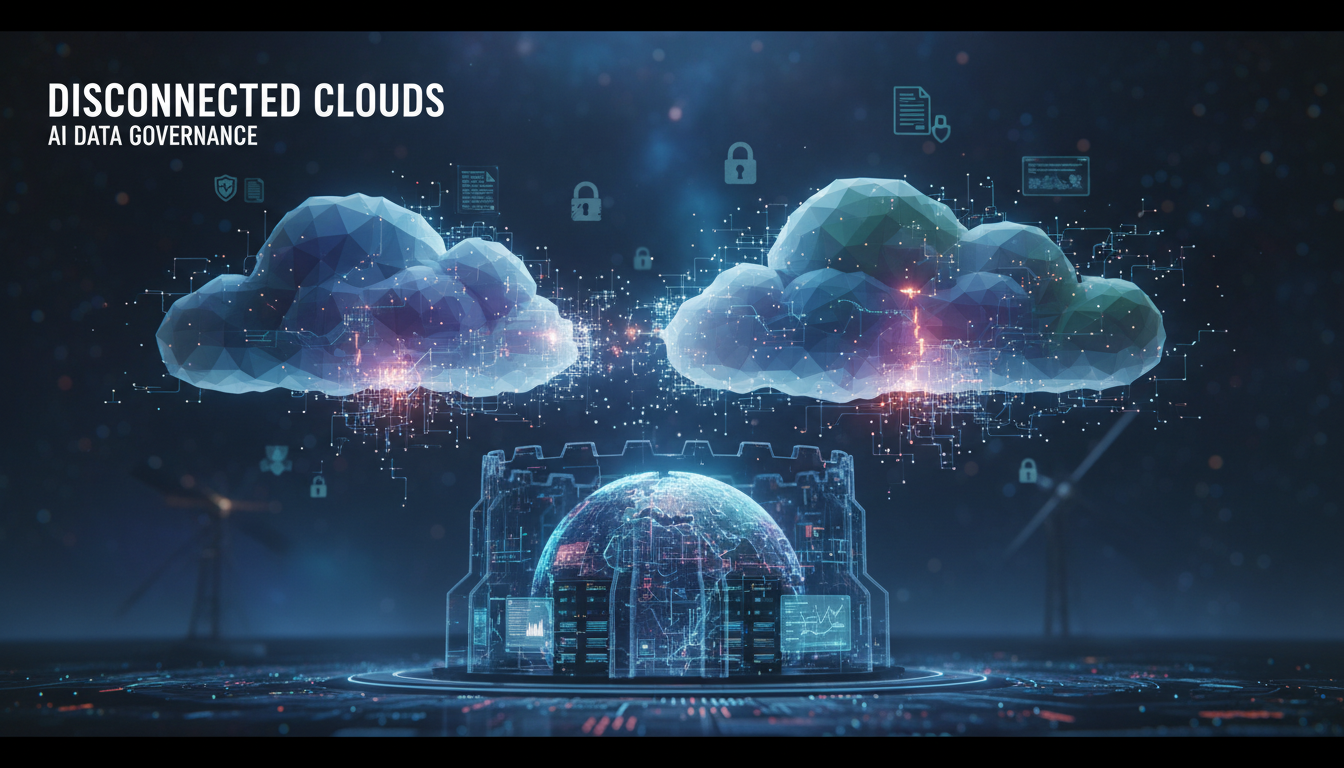
Disconnected Clouds: The Future of AI Data Governance
In an era where digital transformation is pivotal, the concept of disconnected clouds emerges as a novel approach to AI data governance. As businesses navigate the complexities of regulatory demands, the ability to maintain operational continuity and data integrity in isolated environments becomes increasingly important. The rise of disconnected clouds marks a significant shift in how companies handle data governance, offering a solution that meets stringent regulatory standards while ensuring robust operational capabilities.
The Need for Disconnected Clouds
In recent years, the emphasis on data sovereignty and security has grown exponentially. Organizations are under pressure to ensure that their data governance practices align with a myriad of regulations across the globe. Disconnected clouds offer a unique solution by allowing enterprises to operate independently of continuous internet connectivity. This independence not only enhances security but also ensures that businesses can continue their operations uninterrupted, regardless of external connectivity issues.
Disconnected clouds provide an environment where data remains within the confines of the organization, reducing the risks associated with external data breaches. This setup is particularly beneficial for industries that handle sensitive information, such as healthcare, finance, and government sectors. By operating in a disconnected mode, these organizations can ensure that their data governance strategies are not compromised by external factors.
Microsoft’s Role in Advancing Disconnected Cloud Solutions
Microsoft has taken significant strides in advancing the capabilities of disconnected clouds, particularly for regulated industries and public sectors. The company’s comprehensive approach combines Azure Local, Microsoft 365 Local, and Foundry Local into a unified sovereign private cloud solution. This architecture enables businesses to deploy and manage their applications and data in a fully disconnected environment, leveraging familiar governance and policy controls.
The ability to run critical infrastructure offline while maintaining governance standards is a game-changer for organizations seeking to enhance their data governance frameworks. Microsoft’s initiative ensures that enterprises can maintain control over their data and operations, even in the absence of internet connectivity. This capability is crucial for maintaining business continuity and meeting regulatory compliance requirements.
Enhancing AI Data Governance
One of the primary challenges in deploying AI in disconnected environments is the high compute power required to run large models. Microsoft’s Foundry Local addresses this challenge by enabling enterprises to deploy AI inferencing on their own physical servers, using advanced hardware from partners like NVIDIA. This setup ensures that AI operations are conducted within customer-controlled boundaries, providing an additional layer of data governance.
The integration of AI in disconnected clouds allows businesses to harness the power of AI without compromising on data security or sovereignty. As organizations increasingly rely on AI to drive decision-making and innovation, the ability to do so within a secure, disconnected environment becomes a strategic advantage.
Strategic Implementation for CIOs
Implementing disconnected clouds requires careful planning and execution. CIOs must map workloads to the appropriate control posture based on risk, regulation, and specific mission requirements. The flexibility of disconnected environments allows businesses to start with smaller deployments and scale up as needed, ensuring that their infrastructure aligns with evolving business needs.
This strategic approach to deployment not only enhances data governance but also provides a scalable solution for businesses operating in highly regulated sectors. By leveraging disconnected clouds, organizations can achieve a balance between innovation and compliance, ensuring that their data governance practices are both robust and adaptable.
The Future of AI Data Governance
As the digital landscape continues to evolve, the importance of disconnected clouds in AI data governance cannot be overstated. These solutions offer a pathway for businesses to navigate the complexities of regulatory compliance while maintaining operational resilience. By providing a secure, scalable, and independent environment, disconnected clouds empower organizations to innovate confidently and sustainably.
In conclusion, the rise of disconnected clouds represents a pivotal moment in the evolution of AI data governance. As businesses strive to meet the demands of an increasingly regulated world, these solutions offer a viable path forward, ensuring that data sovereignty, security, and operational continuity remain at the forefront of digital transformation efforts.