Google's Bold Move: Transforming Industrial Robotics with AI Integration
Google's Bold Move: Transforming Industrial Robotics with AI Integration
In a strategic shift that could redefine the landscape of industrial robotics, Google has officially integrated Intrinsic, a subsidiary focused on AI-driven robotics, into its core operations. This move signifies more than just a corporate reshuffle; it marks a calculated bet on the future of AI in manufacturing and industrial applications.
From Moonshot to Mainstream
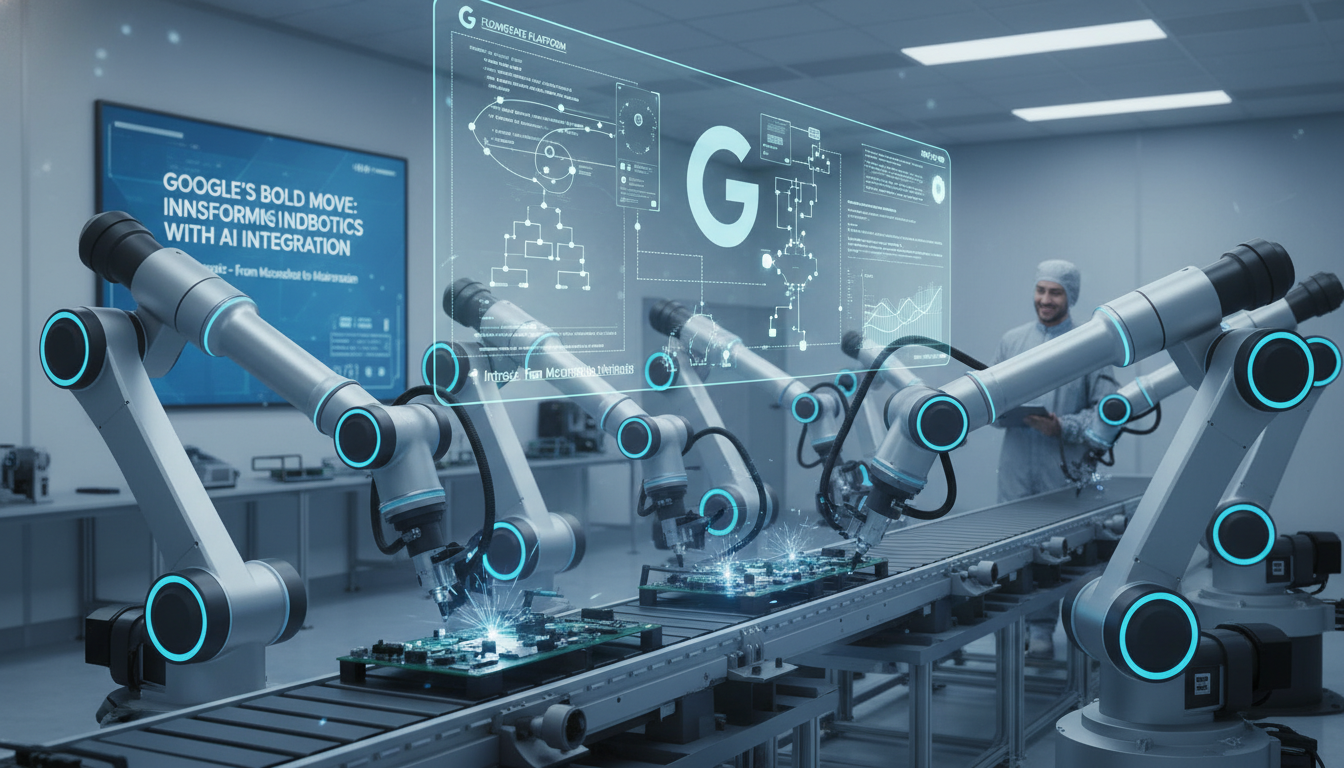
Intrinsic emerged from Alphabet’s X, the innovation lab responsible for groundbreaking projects like Waymo and Wing. Initially launched as an independent entity in 2021, Intrinsic's mission has been to democratize access to advanced robotics by simplifying the programming of industrial robots. The complexity and cost associated with robot programming have long been barriers to entry for manufacturers, often requiring specialized engineering skills and extensive coding. Intrinsic's flagship platform, Flowstate, addresses this by providing a web-based interface that eliminates the need for complex code, making robotic applications more accessible.
This platform is designed to be versatile, working seamlessly with various hardware, software, and AI models. Google’s CEO Sundar Pichai has likened Flowstate to Android, underscoring its potential to become a foundational technology in robotics.
Strategic Timing and Alignment
Google’s decision to integrate Intrinsic is part of a broader strategy to consolidate its robotics capabilities. This follows a series of calculated moves, including the hiring of Boston Dynamics’ CTO and the release of a standalone robotics SDK. These actions position Google uniquely in the market, enabling the company to offer a comprehensive package that includes AI models from DeepMind, deployment software from Intrinsic, and robust cloud infrastructure.
The timing of this integration is particularly significant given the rapid growth of the industrial robotics market. According to McKinsey, the market for general-purpose robots could reach $370 billion by 2040. Google's comprehensive approach, combining hardware and software solutions with cutting-edge AI, positions it to capture a significant share of this burgeoning market.
Implications for Enterprises
For businesses, Google's integration of Intrinsic represents a shift towards greater accessibility and efficiency in manufacturing processes. By combining Intrinsic’s development platform with Google's AI and cloud technologies, enterprises can leverage advanced capabilities in reasoning, perception, and learning. This integration allows for better interpretation of sensor data, adaptability to dynamic environments, and the execution of complex tasks with precision.
Intrinsic has also been proactive in expanding its influence through strategic acquisitions, including the purchase of Open Source Robotics Corp. This acquisition expands Intrinsic’s reach by integrating the Robot Operating System (ROS), a popular framework for robot software development. Additionally, a strategic partnership with Foxconn aims to develop intelligent robots for full factory automation, further solidifying Intrinsic's position in the electronics manufacturing sector.
The Future of Advanced Manufacturing
The integration of Intrinsic into Google's operations promises to transform production economics and operational frameworks. By harnessing Google's extensive infrastructure and AI capabilities, Intrinsic can offer enterprises a pathway to advanced manufacturing that is both efficient and scalable. This promises not only to reduce costs but also to foster innovation in production processes.
The synergy between Google’s AI prowess and Intrinsic’s robotics expertise could redefine what is possible in manufacturing, making advanced robotic solutions more accessible to businesses of all sizes. This could lead to significant operational transformations, with implications for productivity, cost-efficiency, and competitive advantage in the global marketplace.
Conclusion
Google's strategic integration of Intrinsic is a bold move that underscores the company's commitment to leading the AI and robotics revolution. By bringing together cutting-edge AI, robust cloud infrastructure, and innovative robotics software, Google is well-positioned to drive significant advancements in industrial automation. This initiative not only aligns with the growing demand for AI-driven solutions but also sets a new standard for accessibility and efficiency in the industrial sector. As Google continues to build on this foundation, the impact on global manufacturing industries could be profound, ushering in a new era of advanced, intelligent, and accessible robotics.