Guardians of AI: Why Human Insight is Key to Cyber Defense Success
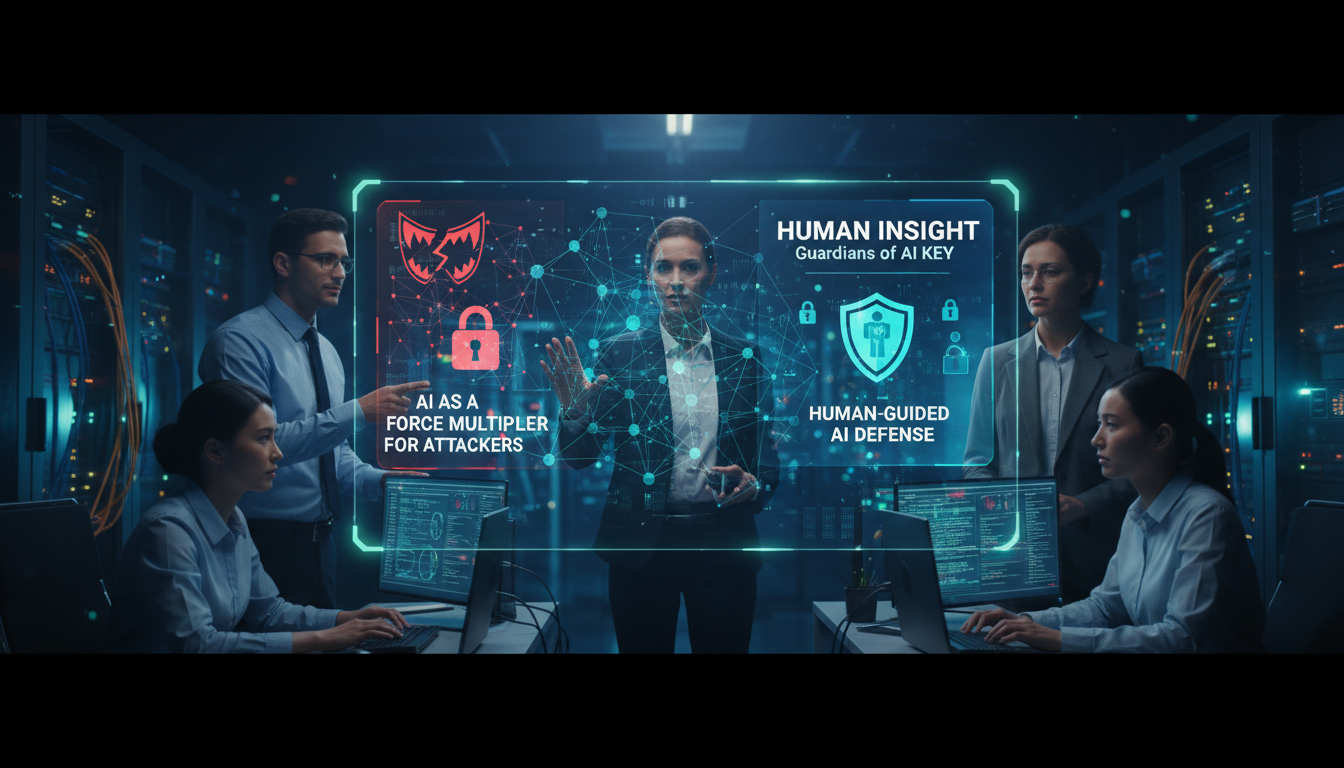
Guardians of AI: Why Human Insight is Key to Cyber Defense Success
The Evolving Landscape of Cyber Threats
In an era where cyber threats are evolving at an unprecedented pace, organizations worldwide are scrambling to shore up their defenses. The 2026 IBM X-Force Threat Intelligence Index highlights a staggering 44% rise in attacks targeting public-facing applications and a 49% increase in active ransomware groups. The manufacturing sector remains the most frequently targeted industry for the fifth year running. However, the real challenge is not just the increase in attacks, but the speed at which they occur, largely due to advancements in artificial intelligence (AI).
The Double-Edged Sword of AI in Cybersecurity
AI functions as a double-edged sword in the realm of cybersecurity. While it acts as a "force multiplier" for attackers, increasing the speed and scale of attacks, it also offers potential benefits for defenders. Yet, the current landscape reveals a critical gap: organizations are deploying defensive AI tools more rapidly than they can effectively govern them. As Jim Gumbley, Business Information Security Officer at Thoughtworks, observes, the problem lies not in the tools themselves but in the lack of human oversight and understanding.
Speed Without Understanding: The Core Issue
The acceleration of cyberattacks is not rooted in new techniques but in the rapid execution of existing ones. AI enables attackers to scan for vulnerabilities across vast attack surfaces with unprecedented efficiency. Legacy systems, often accumulated through years of growth and acquisitions, are particularly vulnerable due to their sprawling and poorly documented nature. These older systems are challenging to patch and defend, making them prime targets.
Despite the potential of AI to enhance security measures, the deployment of these tools often outpaces the organizational frameworks needed to govern them. According to ISC2's 2025 Cybersecurity Workforce Study, nearly 90% of security professionals report significant cybersecurity incidents resulting from skills shortages. This indicates a pressing need for human insight and governance in the deployment of AI security tools.
The Necessity of Human Governance
The integration of AI in cybersecurity demands mature governance models that are currently lacking in many organizations. According to Deloitte's 2026 State of AI in the Enterprise report, only one in five companies has established a mature governance framework for autonomous AI agents. Without clear guidelines on system behavior and failure consequences, AI defenses become difficult to evaluate and trust.
The risk of misaligned AI defenses is exemplified by vulnerabilities such as prompt injection, where malicious instructions hidden in external content can hijack an AI agent's behavior. This vulnerability underscores the necessity for human oversight to ensure that AI systems operate as intended and that they are equipped to handle anomalies safely.
Human Insight: The Key to Effective AI Governance
The effectiveness of AI in cyber defense hinges on human insight. Governance is not a plug-and-play solution but a complex process that requires human judgment to define what systems should do under various conditions. Simple systems with low risk require proportionate controls, while more sensitive systems demand rigorous scrutiny and oversight.
The professionals poised to lead the next wave of cybersecurity innovations are those with expertise in both governance and technology. While AI can generate code and automate processes, understanding the broader implications of system actions and ensuring comprehensive oversight remains a uniquely human responsibility.
Bridging the Gap Between Technology and Governance
To harness the full potential of AI in cybersecurity, organizations must bridge the gap between technology and governance. This requires a concerted effort to develop robust governance frameworks that incorporate human judgment in defining system behavior. By integrating human insight with AI capabilities, organizations can create a resilient defense strategy that adapitates to the evolving threat landscape.
Ultimately, while AI offers powerful tools for enhancing cybersecurity, its success depends on the guidance and oversight provided by skilled human professionals. By investing in human expertise and governance, organizations can ensure that their AI-driven defenses are not only effective but also trustworthy and resilient in the face of emerging threats.