Navigating the Future of Quality Assurance: New Roles for AI in 2026
Navigating the Future of Quality Assurance: New Roles for AI in 2026
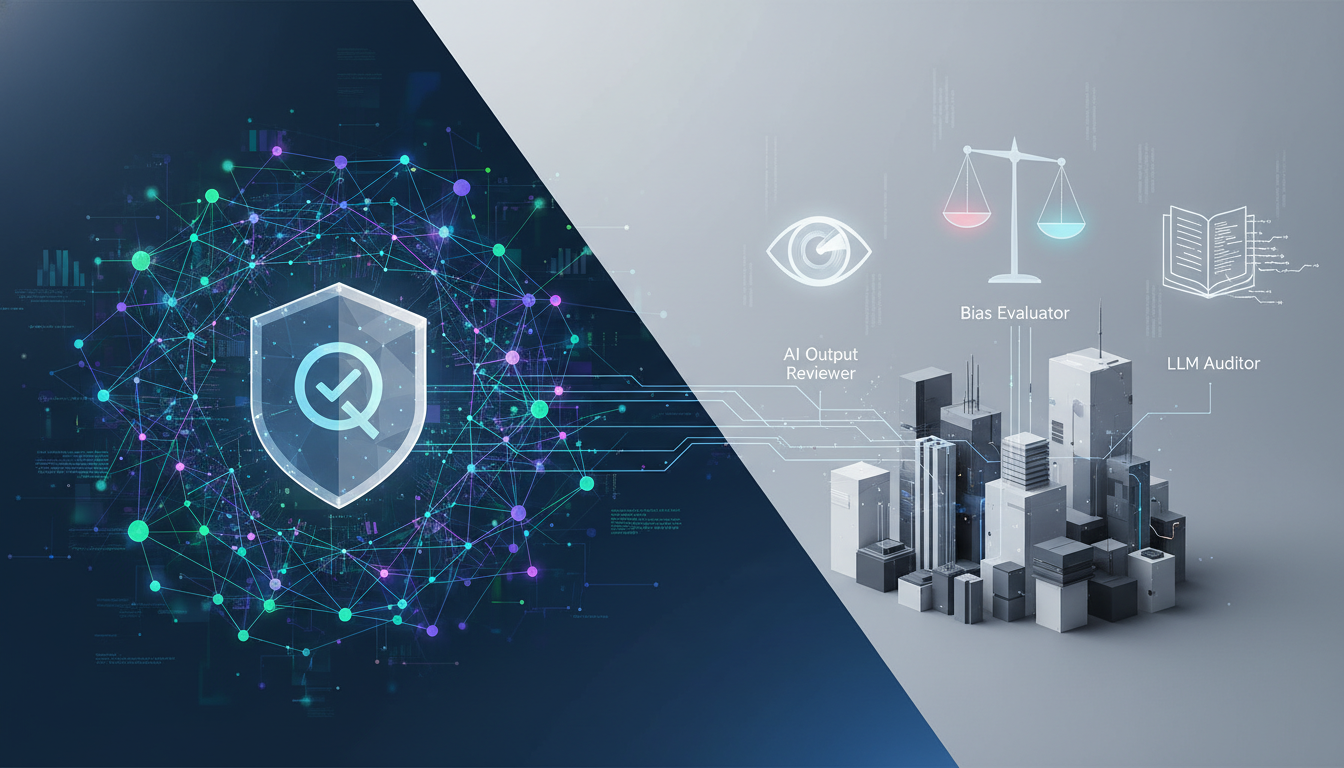
The advent of artificial intelligence (AI) technologies has revolutionized various sectors, and quality assurance (QA) is no exception. As traditional software testing frameworks prove inadequate for AI systems, new QA roles have emerged to navigate the complexities of AI decision-making. By 2026, roles like AI Output Reviewer, Bias Evaluator, and LLM Auditor will be critical in ensuring the efficacy, fairness, and governance of AI systems.
The Shift: From Software Testing to AI Decision Validation
For decades, QA operated within a deterministic framework, where software behavior was validated against predefined specifications. This approach is ill-suited for AI systems, which are inherently probabilistic and context-sensitive. Traditional QA methods, which focused on binary pass/fail outcomes, must now evolve to evaluate AI decision-making, which requires nuanced judgment and contextual awareness.
AI Output Reviewer: The First Line of AI Quality Assurance
The AI Output Reviewer plays a pivotal role in assessing the quality of outputs generated by Large Language Models (LLMs) before they reach end-users. Unlike traditional QA roles that focus on behavior validation, this role requires a blend of editorial skills, cognitive science understanding, and testing acumen to ensure outputs are coherent, accurate, and safe.
Responsibilities of an AI Output Reviewer
- Define quality rubrics for evaluating coherence, accuracy, safety, and tone.
- Systematically sample and grade production outputs.
- Manage feedback loops for continuous improvement, involving prompt engineering and model retraining.
- Detect hallucinations and factual drift in outputs.
Bias Evaluator: Ensuring Fairness in AI Systems
The Bias Evaluator is tasked with identifying and mitigating biases in AI outputs, which can manifest as demographic disparities, cultural misrepresentations, and language inequalities. This role is intellectually demanding, requiring expertise in machine learning, social sciences, and adversarial thinking to ensure AI systems produce fair and unbiased outputs.
Key Responsibilities
- Develop bias test datasets and methodologies.
- Conduct large-scale output analyses to uncover patterns of bias.
- Collaborate with engineering teams to implement model improvements based on bias findings.
LLM Auditor: Governing AI Systems at Scale
As AI systems become more integrated into business operations, the LLM Auditor role emerges as essential for maintaining governance, traceability, and accountability. This role functions like a financial auditor for AI systems, ensuring compliance with regulatory standards and managing risks associated with AI deployment.
Core Responsibilities
- Design and maintain AI audit architectures.
- Conduct adversarial testing to identify vulnerabilities.
- Integrate QA processes into continuous integration/continuous deployment (CI/CD) pipelines.
- Produce audit-ready reports for regulatory compliance.
Unified AI QA Pipeline: How These Roles Work Together
The integration of AI Output Reviewers, Bias Evaluators, and LLM Auditors forms a comprehensive AI QA framework. This unified pipeline is essential for ensuring quality, fairness, and governance, ultimately supporting scalable and compliant AI deployments. Organizations must focus on building these roles into a cohesive QA strategy rather than treating them as isolated functions.
Skills QA Engineers Must Build for 2026
As QA roles evolve, so too must the skill sets of QA professionals. Key areas of development include:
- Proficiency in prompt engineering and AI behavior analysis.
- Expertise in data validation and risk-based testing.
- Advanced understanding of model evaluation techniques and bias detection frameworks.
Enterprise Implementation: Operationalizing New QA Roles in 2026
To successfully implement these new QA roles, enterprises must transform their operating models. This involves integrating AI assurance into the entire product lifecycle, from design to production. Successful organizations treat AI QA as a strategic capability, leveraging centralized governance alongside distributed role execution to ensure consistency and compliance.
AI QA Architecture: Platforms, Tools, and Pipelines
Enterprises must build robust AI QA architectures that integrate evaluation, observability, and governance. Essential components include:
- Evaluation layers with rubric-based scoring engines.
- Bias detection layers with fairness scoring systems.
- Observability layers for tracking input/output and evaluation scores.
- Audit layers for compliance reporting and version control.
Conclusion
The transformation of QA roles in 2026 marks a pivotal shift from validating software behavior to governing AI decision-making. With the rise of roles like AI Output Reviewer, Bias Evaluator, and LLM Auditor, enterprises must focus on operationalizing AI assurance as a core capability. Those who adapt quickly will gain a significant competitive advantage, ensuring not only functional AI systems but also ethical and accountable ones.