Revolutionizing Supply Chains: The Rise of AI-Driven Intelligence
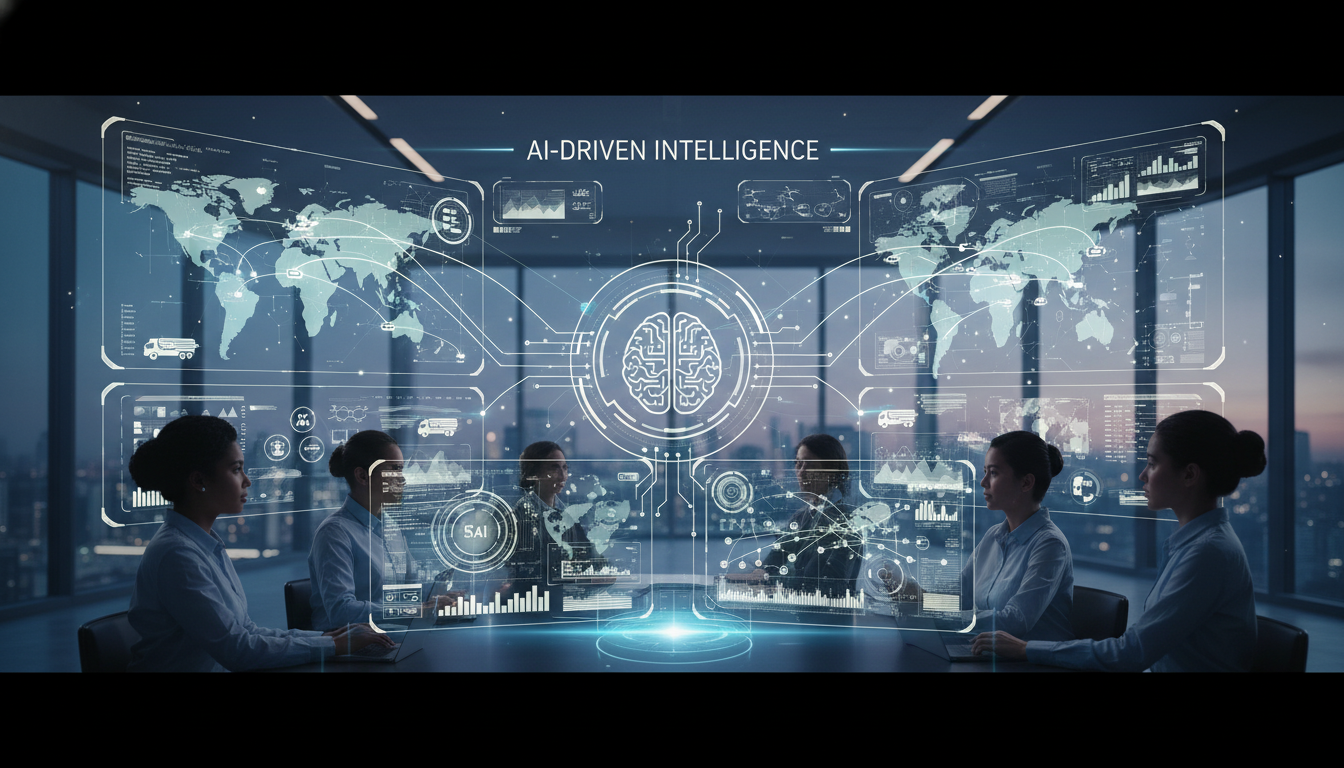
Revolutionizing Supply Chains: The Rise of AI-Driven Intelligence
In today's rapidly evolving business landscape, supply chain leaders face unprecedented challenges. The demand for faster, leaner operations and real-time risk management has never been higher, fueled by an era of constant disruption. From global pandemics and geopolitical tensions to climate change and shifting consumer expectations, the need for resilient supply chains has become paramount. Enter generative AI (GenAI) — a transformative force that is reshaping how supply chains operate, turning data into actionable insights, and enabling companies to navigate uncertainties with agility and confidence.
What is GenAI for Supply Chains?
Generative AI for supply chains is not merely about automating routine tasks. It represents a paradigm shift in how organizations connect disparate systems and extract meaningful insights. Traditional supply chain tools often operate in silos, leading to inefficiencies and delays. In contrast, AI-powered platforms continuously learn from a vast array of information sources, providing stakeholders with real-time insights to make informed decisions swiftly. This capability allows companies to query carrier performance, resolve customer concerns, and anticipate operational risks seamlessly, all without the need for digging through disconnected systems.
From “Just-in-Time” to “Just-in-Case”
Historically, supply chains have relied on the "just-in-time" model, optimizing for efficiency by maintaining minimal inventory and tightly synchronized operations. However, the last few years have underscored the fragility of this approach in a world defined by volatility and disruption. As a result, the industry is shifting towards a "just-in-case" model that prioritizes resilience over mere efficiency. This new approach involves building overlapping networks, strategic capacity, and near- or friend-shoring to ensure continuity amidst disruptions.
The transition to this model requires more than just additional capacity or safety stock. It necessitates seamless knowledge flow across teams, yet companies still grapple with challenges such as siloed data, rising costs, and labor shortages. Here, generative AI serves as the bridge, connecting scattered information across systems, driving measurable impact, and empowering teams to be more productive and responsive.
Shared Context Over More Systems
Managing complexity is a daily reality for supply chain professionals, often requiring them to navigate multiple tools to establish a common operating procedure. Critical data is dispersed across various systems, from ERP for planning to WMS/TMS/OMS for logistics, leading to delays when speed is crucial. Generative AI addresses this by providing shared context without the need for expensive re-platforming. It enables teams to gain end-to-end visibility, maintain omnichannel consistency, and deliver faster, confident customer responses.
When context is unified, execution becomes consistent, and resilience becomes the default. AI ensures that execution is not a relay race but a synchronized effort across all functions.
From Reactive to Proactive Operations
While visibility is crucial, it is insufficient on its own to build resilience. Organizations must pair visibility with actionable insights to thrive in a dynamic environment. Generative AI accelerates the OODA loop (observe, orient, decide, act), bridging the gap between insight and execution. It provides real-time data, offers verifiable answers, and automates execution processes, allowing teams to respond proactively rather than reactively.
For example, AI-generated summaries and tradeoffs help teams align quickly on next steps, while agentic workflows automate tasks like drafting customer updates or reconciling discrepancies. This proactive approach ensures that small issues are addressed before they escalate, minimizing disruptions and enhancing overall efficiency.
A Platform Approach for Compounding Value
While many vendors offer powerful AI point solutions for specific use cases, these often remain isolated within individual systems. To build resilience across the enterprise, supply chain leaders need a horizontal platform that unifies these capabilities into cohesive, connected workflows. Such a platform should offer enterprise-grade features, including secure connectivity, native and custom connectors, and incremental adoption patterns. This approach enables organizations to unlock the full potential of their existing systems while facilitating seamless integration and scalability.
Addressing Risk, ROI, and Roadmap
As organizations consider integrating AI into their supply chains, questions about integration with legacy systems, risk, and ROI naturally arise. The right platform should offer robust connectors and enterprise-grade security, preserving existing investments while unlocking knowledge across diverse systems. Opting for an enterprise-grade platform shortens time-to-value, reduces governance risk, and allows for scalable growth with custom extensions.
In terms of ROI, starting with areas where manual coordination is most costly — such as onboarding, exception handling, and customer communications — can yield significant benefits. Faster cycles, fewer handoffs, and reduced time-to-resolve translate into improved on-time-in-full (OTIF) performance and reduced operating costs.
Building Intelligent, Connected Supply Chains
The past few years have prompted a fundamental reassessment of what resilience means for supply chains. The path forward is not about adding more systems or dashboards but rather about creating an intelligence layer that enhances the ones already in place. When every team operates from a shared source of truth, execution becomes synchronized, and resilience becomes an inherent characteristic of the supply chain.
Generative AI offers the potential to transform visibility into action, giving teams the shared context needed to respond proactively and collaboratively. By embracing this shift, companies can build supply chains that not only withstand disruptions but also thrive in the face of challenges, moving faster and learning continuously.