Revolutionizing Telecom: SK Telecom's Bold AI-Driven Transformation at MWC 2026
Revolutionizing Telecom: SK Telecom's Bold AI-Driven Transformation at MWC 2026
Introduction to SK Telecom's AI Vision
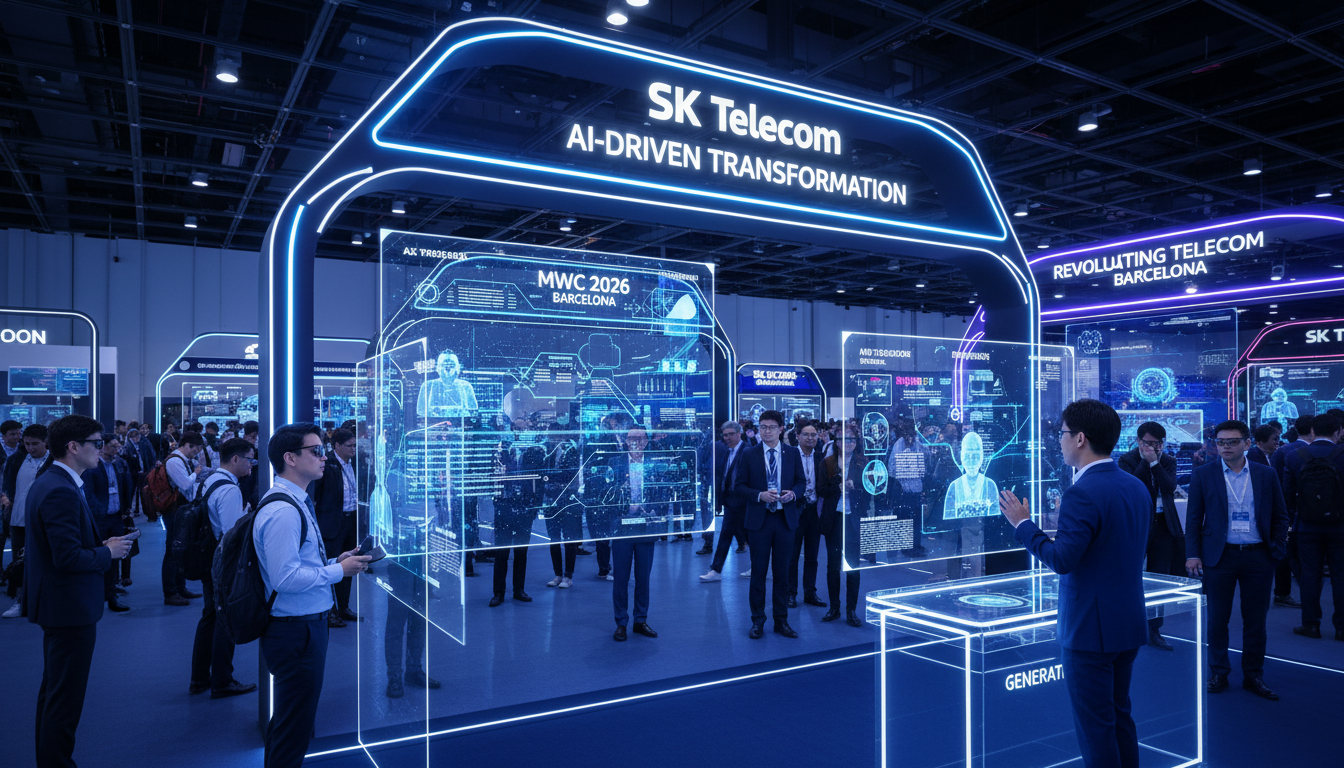
At the Mobile World Congress (MWC) 2026 in Barcelona, SK Telecom unveiled an ambitious plan to reconstruct its core around artificial intelligence (AI). This transformation is not merely about incorporating AI tools; it is a total overhaul of the company’s systems and infrastructure. The goal? To position South Korea among the top three AI leaders globally. This bold move by SK Telecom, outlined by CEO Jung Jai-hun, marks a significant shift towards what the company calls an “AI Native” strategy.
Rewriting Telecom Systems Around AI
Central to SK Telecom's strategy is the complete redesign of its integrated IT systems to be optimized for AI. This includes revamping sales, line management, and billing systems, aiming to offer personalized plans and memberships based on unique customer usage and behavior patterns. The company is also implementing a Zero Trust security framework, enhancing authentication, access controls, and AI-based monitoring.
For the telecom industry, this represents a shift from relying on legacy systems to AI-driven solutions that could redefine pricing, service design, and fault detection. However, it also poses new questions about data governance and the ethical use of customer data in training AI models.
Autonomous Network Operations
SK Telecom's strategy extends to its network operations, which will be powered by AI to automate wireless quality management, traffic control, and network equipment operations. With AI-RAN technology, the company aims to enhance network speed and reduce latency. This move toward autonomous networks highlights the company's commitment to leveraging AI to improve operational efficiency and customer experiences.
A Unified AI Agent for Customer Interaction
Another innovative aspect of SK Telecom's transformation is the development of an integrated AI agent designed to streamline customer interactions across its platforms. This agent will connect experiences between the T world customer portal and the T Direct Shop online store, analyzing daily usage patterns to offer tailored suggestions. The AI Contact Center will empower customer service representatives with AI tools to enhance support, while AI in retail stores will help staff identify customer needs and offer personalized recommendations.
Building 1GW-Class AI Data Centres
In addition to revamping systems and customer interactions, SK Telecom is making significant investments in infrastructure. The company plans to construct hyperscale AI data centers across Korea, targeting over 1 gigawatt in capacity. This initiative aims to attract global investment and establish Korea as a major AI data center hub in Asia. The company also plans to collaborate with OpenAI to build an AI data center in Korea’s southwestern region.
On the AI model front, SK Telecom's sovereign AI foundation model, currently the largest in Korea with 519 billion parameters, is set to be upgraded to over one trillion parameters. The expansion will include multimodal capabilities to process image, voice, and video data, showcasing SK Telecom's commitment to cutting-edge AI technology.
Transforming Internal Culture
SK Telecom's AI-driven transformation also involves a cultural shift within the organization. The company has introduced an “AX Dashboard” to track AI use across departments, and an “AI Board” to oversee transformation efforts. An “AI playground” allows employees to build AI agents without coding, fostering innovation and engagement. With more than 2,000 AI agents already in use, SK Telecom is not just changing its systems but also its corporate culture to be centered around AI.
Conclusion: AI as the New Operating Model
SK Telecom's strategy at MWC 2026 showcases a comprehensive approach to integrating AI into every facet of its operations. From infrastructure and customer service to internal culture, the company is embedding AI as an operating layer rather than a separate feature. This transformation sets a precedent for other telecom enterprises, demonstrating how AI can be leveraged for innovation, efficiency, and customer-centric solutions.
While the success of such an ambitious undertaking remains to be seen, SK Telecom's commitment to an AI-driven future is clear. By aligning infrastructure, models, applications, and governance into a single program, SK Telecom is not just participating in the AI revolution but is actively shaping its path.