Unleashing Creativity: Explore the Power of AgentGPT and Autonomous AI Agents
Unleashing Creativity: Explore the Power of AgentGPT and Autonomous AI Agents
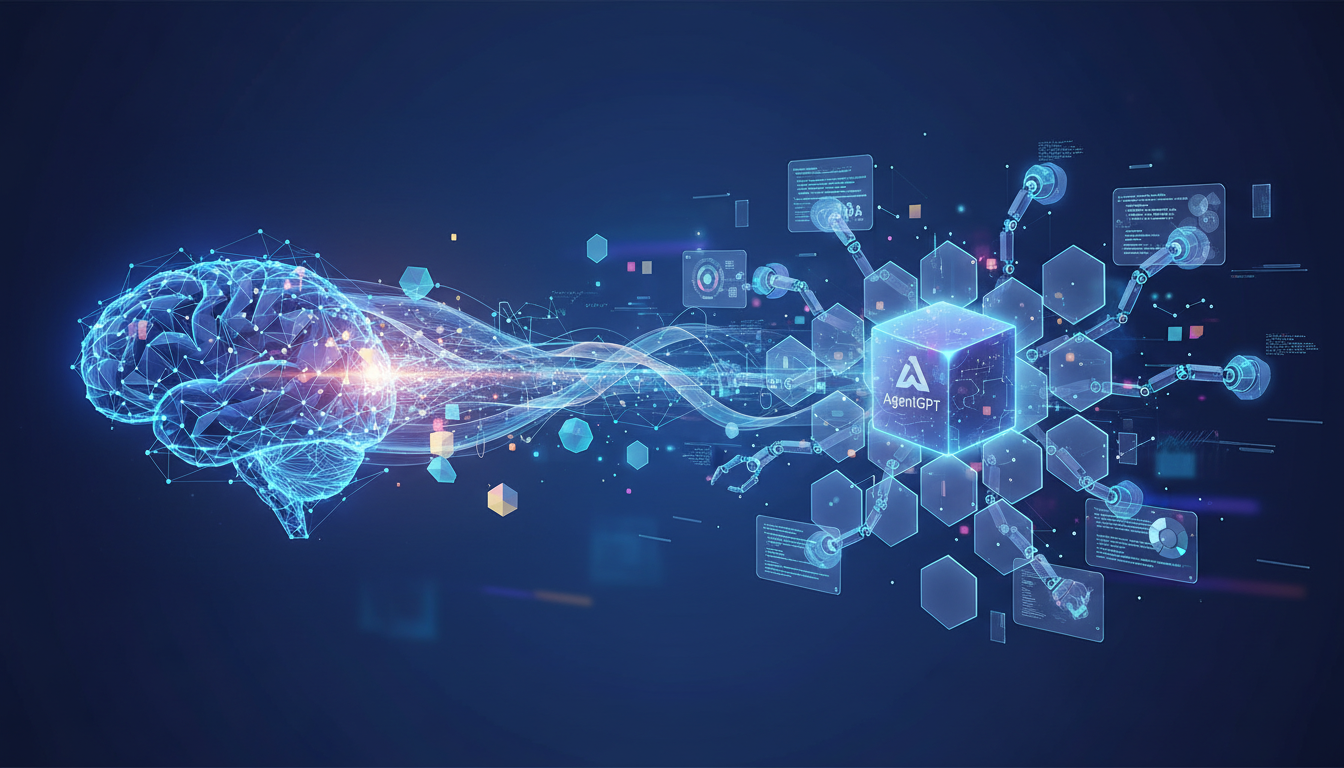
The field of artificial intelligence (AI) continues to evolve rapidly, introducing novel tools that extend beyond traditional chatbots. One of the latest innovations is AgentGPT, an open-source, browser-based AI platform that empowers users to create and deploy autonomous AI agents. This tool stands out for its ability to perform complex tasks with minimal manual intervention, positioning itself as a versatile solution for various applications.
Understanding AgentGPT
AgentGPT allows users to design AI agents that can think, plan, and act autonomously towards achieving a user-defined goal. This sets it apart from conventional AI models like OpenAI's ChatGPT, which requires continuous user interaction. By leveraging a user-friendly interface, AgentGPT democratizes the creation of AI agents, making it accessible for purposes such as research, data gathering, and automating repetitive tasks.
One of the major advantages of AgentGPT is its no-code nature, which eliminates the need for users to have programming skills or set up complex development environments. Templates are available to guide users in setting effective goals, making the platform approachable for beginners and experts alike.
The Distinctive Architecture of AgentGPT
AgentGPT operates on a generative pretrained transformer (GPT) model, a sophisticated language model architecture known for its deep learning capabilities. Unlike traditional chatbots, which merely generate text responses, AgentGPT enables AI agents to autonomously determine the best course of action. This unique functionality allows it to explore unknown territories and uncover insights that users might not have initially considered.
AgentGPT Versus ChatGPT
While both AgentGPT and ChatGPT are built upon OpenAI's language models, their applications differ significantly. ChatGPT excels in scenarios where interactive dialogue and iterative refinement are required. It allows users to ask follow-up questions and delve deeper into topics through conversational exchanges.
In contrast, AgentGPT is tailored for tasks that require a more hands-off approach. Users can set an initial goal, and the agent independently navigates through multiple steps to achieve it. This makes AgentGPT particularly useful for complex or open-ended projects where the path to the solution is not immediately clear.
Practical Use Cases of AgentGPT
AgentGPT's strength lies in its ability to serve as a digital assistant or co-pilot in various scenarios. For example, a business owner could create an agent to monitor industry trends and summarize risks and opportunities in a weekly report. The agent could autonomously gather data, synthesize information, and present concise insights without constant user prompts.
Additionally, AgentGPT supports scalability by allowing multiple agents to run in parallel, each tackling different objectives. This capability makes it an attractive prototype for enterprise-grade systems, where robust monitoring and evaluation are critical.
The Future of Autonomous AI Agents
The emergence of tools like AgentGPT signifies a shift towards more autonomous AI systems. These agents are poised to revolutionize industries by automating complex workflows, enhancing productivity, and uncovering new opportunities. As the technology matures, it is expected to integrate seamlessly with databases and external tools, further expanding its problem-solving capabilities.
In conclusion, AgentGPT opens up new possibilities for leveraging AI in innovative ways. Whether used for research, automation, or strategic planning, autonomous AI agents are set to become indispensable tools across diverse sectors, driving creativity and efficiency to new heights. As we continue to explore the potential of these technologies, the future of AI appears more promising than ever.