Unlocking the Secrets of LLMs: A Dive into Mechanistic Interpretability
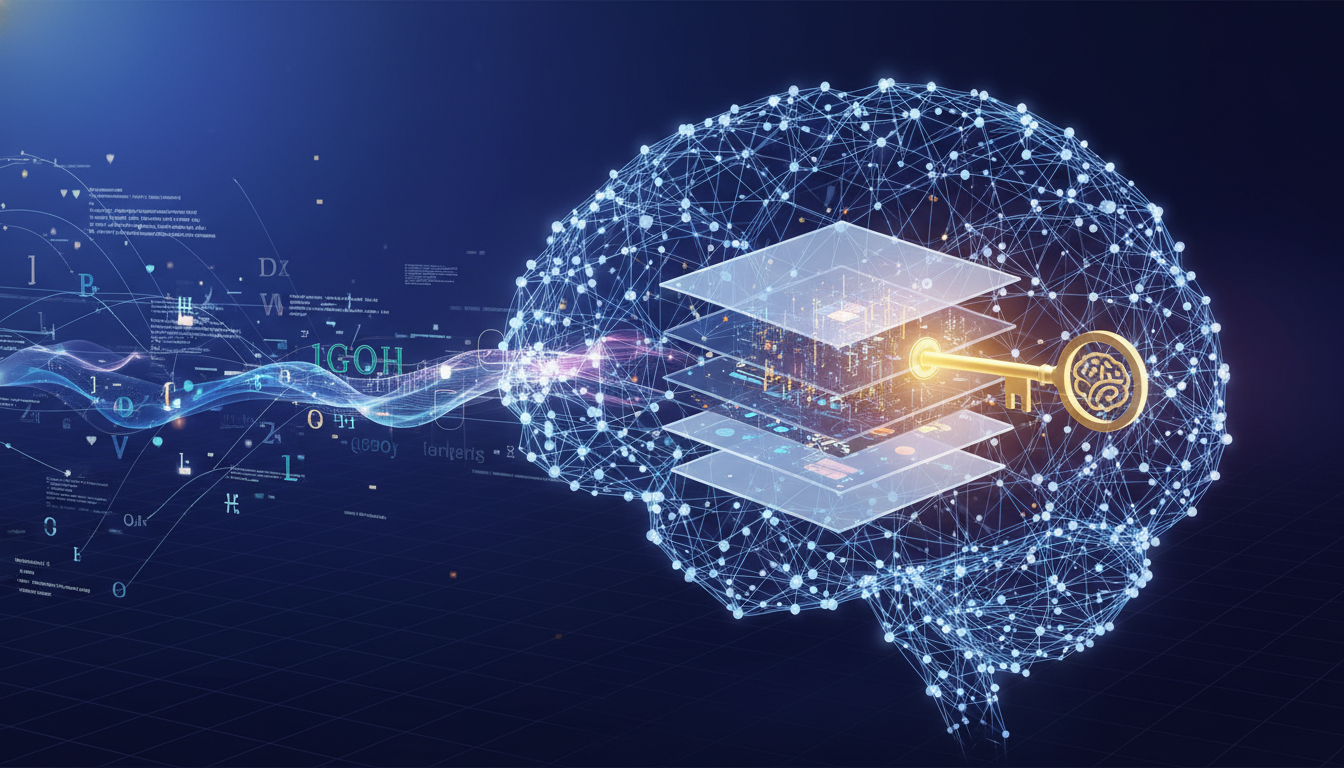
Unlocking the Secrets of LLMs: A Dive into Mechanistic Interpretability
In the ever-evolving landscape of artificial intelligence, Large Language Models (LLMs) have emerged as powerful tools capable of mimicking human-like text generation and comprehension. However, the inner workings of these models remain a mystery to many. Mechanistic interpretability offers a window into understanding the intricate processes of LLMs, revealing how these models process information and make predictions.
Understanding LLM Architecture
To comprehend the potential of mechanistic interpretability, it's crucial to have a foundational understanding of LLM architecture. At their core, LLMs consist of numerous neurons and weighted connections that define how information flows through the network. These models operate by processing sequences of input tokens, predicting the next token based on the given input. The process involves several key components:
Tokenizer: The initial step involves segmenting sentences into tokens, each with a unique ID. This step, while essential, often leads to complexities due to the granular breakdown of language.
Embedding: Tokens are transformed into embedding vectors, creating a matrix that acts as the initial hidden state for the LLM. Positional encoding is then added to maintain the order of tokens in subsequent processing steps.
Transformer Blocks: These consist of attention mechanisms and feedforward neural networks that refine the residual stream. This stream, enriched with context, travels through layers to produce predictions.
Attention Mechanisms: Essential for understanding relationships between tokens, attention heads weigh the importance of different parts of the input, allowing the model to focus on relevant information.
Unembedding: The final step involves mapping the processed residual stream back to the vocabulary space, generating probabilities for the next token prediction.
Mechanistic Interpretability Methods
With a grasp of LLM architecture, we can explore mechanistic interpretability methods. These techniques provide insights into the intermediate processes of LLMs, offering answers to questions about their decision-making:
Neurons and Attention Observations: By examining the activation of individual neurons and attention heads, researchers can discern the roles different components play in processing input.
MLP and Residual Stream Analysis: Observing the output of multi-layer perceptrons (MLPs) and the residual stream across layers reveals how information is transformed and retained throughout the network.
Gradient-Based Attributions: These techniques assess the sensitivity of model predictions to changes in neural values, highlighting critical areas impacting decision outcomes.
Ablation and Steering Experiments: By intentionally modifying or omitting components, researchers can study the effect on model behavior, providing insights into the contributions of specific neurons or pathways.
Use Cases of Interpretability
The insights gained from mechanistic interpretability have practical applications across various domains:
Model Performance Optimization: By steering activations, models can be dynamically guided to exhibit specific traits or focus areas without altering the underlying architecture.
Explainability and Safety: Understanding the internal workings of LLMs enables the detection of undesirable features, enhancing safety and reliability in critical applications.
Training and Development: Identifying and discouraging unnecessary processes during training can lead to more efficient models, optimizing performance and resource use.
Scientific Insights: Beyond practical applications, studying LLMs through interpretability methods offers opportunities to explore language acquisition, cognition, and even parallels with human brain activity.
The Evolution of LLM Interpretability Research
Research in LLM interpretability has advanced significantly, shedding light on complex questions about the models' capabilities:
In-Context Learning and Pattern Recognition: LLMs demonstrate the ability to identify patterns, enhancing their learning capabilities beyond initial training data.
World Understanding and Generalization: Evidence suggests that LLMs develop internal models of the world, allowing them to reason beyond mere memorization of training data.
Latent Knowledge and Steering: LLMs possess latent knowledge that can be uncovered and manipulated, highlighting the possibility of steering model behavior in specific directions.
Conclusion
Mechanistic interpretability is a burgeoning field offering profound insights into the inner workings of LLMs. By dissecting these complex models, researchers can enhance their reliability, explainability, and safety. As the field continues to evolve, automated analysis and systematic application of mechanistic insights will become invaluable, benefiting both industry and research. Understanding LLMs not only advances AI technology but also offers a glimpse into the nature of cognition, both artificial and human.