The Evolution of AI: From Tools to Digital Collaborators
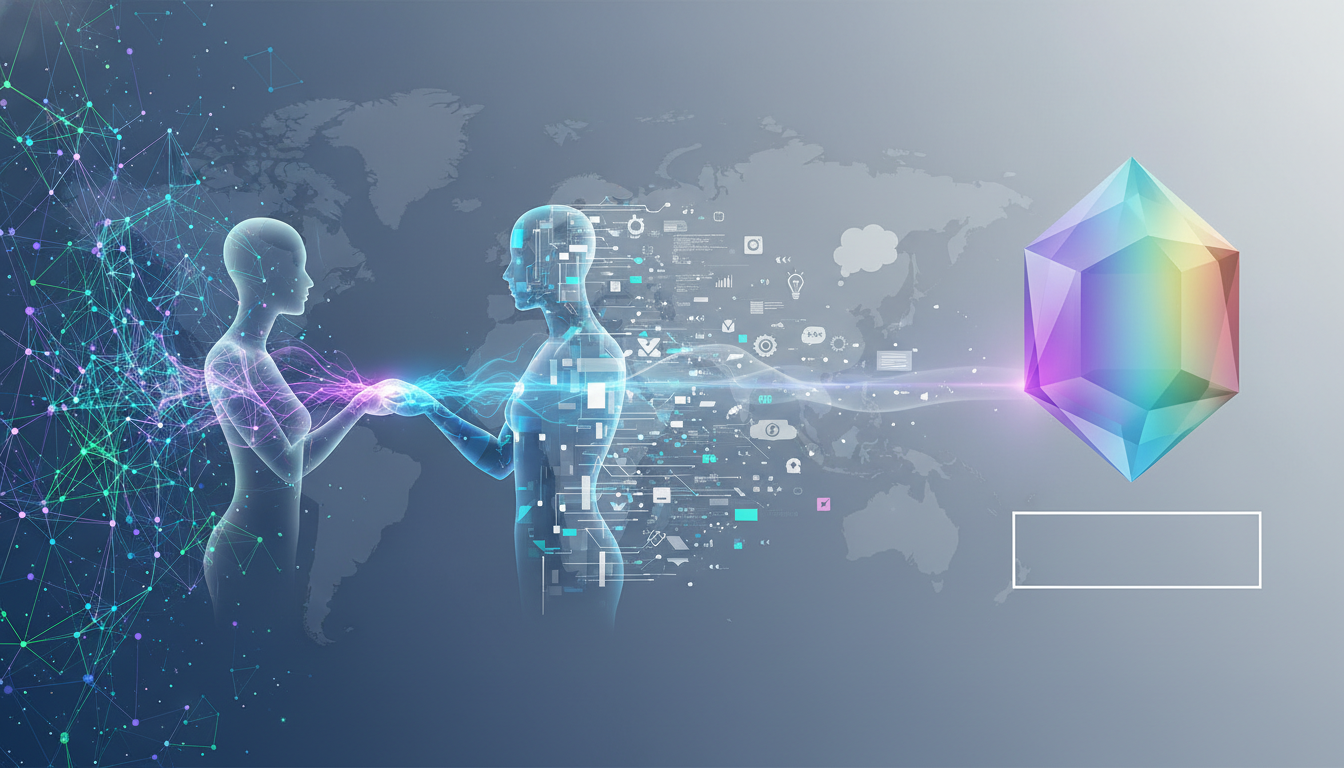
As we approach 2026, the narrative around artificial intelligence (AI) is rapidly shifting. Once seen primarily as a tool for answering questions and performing tasks, AI is now stepping into a role that positions it as a digital collaborator. This transition signifies a transformative era where AI amplifies human capabilities rather than replacing them, reshaping industries across the globe.
AI as a True Partner in the Workforce
Aparna Chennapragada, Microsoft's Chief Product Officer for AI experiences, envisions 2026 as the dawn of a new era in human-AI collaboration. Rather than competing with AI, professionals are advised to learn to work alongside it. This partnership allows small teams to undertake projects with global reach, leveraging AI for data crunching and content generation while humans focus on strategy and creativity. This symbiotic relationship is set to redefine productivity, allowing teams to tackle more significant challenges efficiently.
Securing the Digital Workforce
As AI becomes more integrated into daily operations, the importance of security cannot be overstated. Vasu Jakkal, Corporate Vice President of Microsoft Security, emphasizes that AI agents should be treated like human colleagues in terms of security. This includes giving AI agents clear identities, limiting their access to sensitive information, and protecting them from potential threats. Such measures ensure that organizations can trust AI agents, allowing them to play a more significant role in decision-making processes.
Bridging the Global Health Divide
AI's potential to transform healthcare is monumental. Dr. Dominic King highlights AI's role in extending beyond diagnostics to areas like symptom triage and treatment planning. This progress is crucial given the projected shortage of healthcare workers by 2030. AI tools like Microsoft's Diagnostic Orchestrator have already demonstrated their capability in solving complex medical cases, pointing towards a future where AI helps bridge the healthcare gap, giving people more control over their health outcomes.
Revolutionizing Scientific Research
In the realm of scientific research, AI is poised to become a fundamental component of the discovery process. According to Peter Lee of Microsoft Research, AI will not only assist in summarizing papers but will also generate hypotheses and control scientific experiments. This evolution mirrors AI's role in software development, where it assists developers through pair programming. By acting as a lab assistant, AI can accelerate research, helping scientists make breakthroughs faster than ever before.
Advancements in AI Infrastructure
The infrastructure supporting AI is evolving, focusing on efficiency and effectiveness rather than sheer size. As Mark Russinovich from Microsoft Azure explains, future AI systems will be distributed across networks, optimizing computing power to ensure no resources go to waste. This smarter infrastructure will support global AI innovations, providing a foundation for sustainable and adaptable technological growth.
Understanding the Context of Code
The software development industry is witnessing an explosion in activity, with AI playing an increasingly central role. GitHub's Mario Rodriguez introduces the concept of "repository intelligence," where AI understands not just the code but the context and history behind it. This deeper understanding allows AI to make more informed suggestions, catch errors early, and automate routine tasks, leading to higher-quality software development.
The Imminent Leap in Quantum Computing
Quantum computing, once a distant dream, is on the brink of becoming a reality. Jason Zander of Microsoft Discovery and Quantum speaks of the "quantum advantage" where quantum machines tackle problems beyond the reach of classical computers. The rise of hybrid computing, combining quantum with AI and supercomputers, promises breakthroughs in materials, medicine, and more. Microsoft’s Majorana 1 chip, with its topological qubits, exemplifies the progress towards robust quantum systems capable of addressing complex challenges.
Conclusion
The year 2026 is set to be a landmark in the evolution of AI, heralding an era where AI acts as a genuine collaborator across various fields. From amplifying human potential in the workplace to transforming healthcare and accelerating scientific research, AI's influence is profound. As we embrace these digital collaborators, the focus remains on enhancing human roles rather than eliminating them, setting the stage for a future where technology and humanity thrive together.
Saksham Gupta
Founder & CEOSaksham Gupta is the Co-Founder and Technology lead at Edubild. With extensive experience in enterprise AI, LLM systems, and B2B integration, he writes about the practical side of building AI products that work in production. Connect with him on LinkedIn for more insights on AI engineering and enterprise technology.