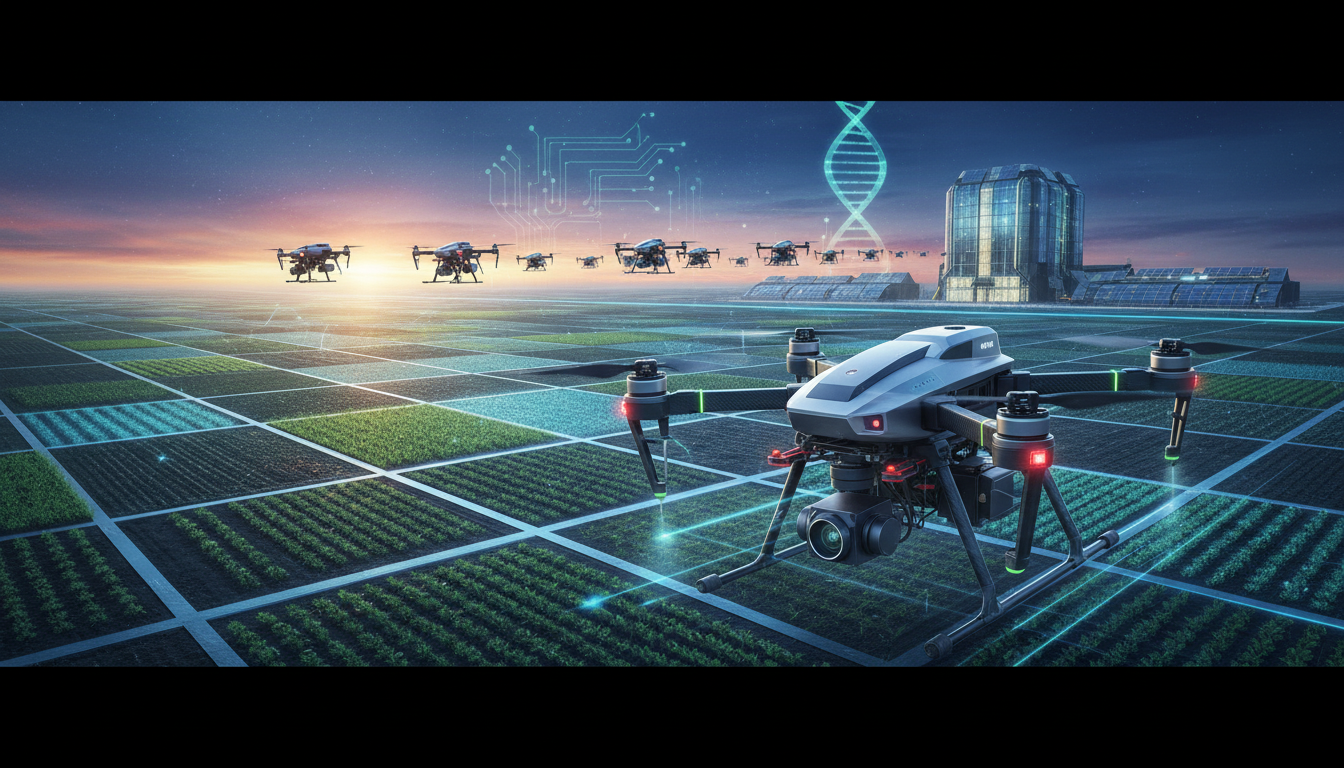
Revolutionizing Agriculture: The Next-Gen Drones Set to Transform Large Farms
Introduction
The agricultural industry is on the brink of a technological revolution, largely driven by innovations in drone technology. As global food demand increases, the need for efficient, scalable, and adaptive farming techniques becomes ever more pressing. Traditional methods of crop management are being challenged by the development of next-generation drones designed specifically for large agricultural operations. This article explores how these advanced drones are set to transform large-scale farming practices.
The Advent of Smart Drones in Agriculture
The introduction of drones tailored for agriculture marks a significant shift from the conventional use of general-purpose drones. Historically, drones used in agriculture required extensive field mapping and pre-planned flight paths, making them less efficient and adaptable to changing conditions. The collaboration between Singapore-based DroneDash Technologies and GEODNET has resulted in the creation of GEODASH Aerosystems, a venture aimed at overcoming these limitations.
The drones developed by GEODASH Aerosystems are equipped with cutting-edge AI vision systems and precise positioning technology, allowing them to navigate and operate effectively without the need for pre-existing maps. This capability is particularly crucial for large-scale farms where conditions can change rapidly, requiring real-time decision-making and adaptability.
Transformative Features of Next-Gen Drones
Real-Time Environmental Adaptation
One of the standout features of these next-gen drones is their ability to perceive and react to their surroundings during flight. Unlike traditional drones, which operate based on predetermined parameters, these drones adjust their altitude, speed, and spray rates in response to real-time environmental conditions. This adaptability ensures optimal crop management, even in the face of unpredictable weather or terrain changes.
Dual-Purpose Functionality
The new drones serve a dual purpose: they are both effective spray applicators and sophisticated aerial sensors. As they carry out spraying operations, they simultaneously collect valuable data on canopy density, plant health, and terrain profiles. This data is processed by DroneDash's AI Smart Farming backend, providing farm operators with actionable insights that can inform future farming strategies, such as adjusting nutrient dosages or identifying areas in need of pest control.
Precision and Efficiency
Precision is paramount in modern agriculture, especially for large estates and plantations. The integration of DroneDash’s AI with GEODNET’s positioning correction technology allows these drones to achieve an accuracy of up to one centimeter. This level of precision is particularly beneficial for structured farming environments like palm oil plantations and row crops, where efficient land coverage is essential.
The Impact on Large-Scale Farms
The deployment of these advanced drones is initially targeted at large farming operations in Southeast Asia, the United States, and South America. These regions, characterized by vast plantations and diverse crop types, stand to benefit significantly from the increased efficiency and reduced labor costs associated with drone-assisted farming.
In particular, palm oil plantations in Southeast Asia are poised to experience a transformation. The ability to quickly redeploy drones after environmental changes reduces the downtime associated with traditional mapping and planning processes, thereby increasing productivity.
Challenges and Future Prospects
While the technological advancements in agricultural drones are promising, there are challenges to address. The reliance on sophisticated AI and sensor systems necessitates robust data management and cybersecurity protocols to protect sensitive agricultural data. Additionally, the initial cost of investment may be a barrier for some farms, although the long-term savings in labor and resource management could offset these costs.
Looking ahead, the integration of drones into standard farming practices could herald a new era of precision agriculture. As technology evolves, we can expect even more sophisticated systems that further enhance the efficiency and sustainability of food production.
Conclusion
The next generation of agricultural drones represents a critical advancement in the quest for sustainable and efficient farming solutions. By combining AI-driven adaptability with high-precision operation, these drones offer a transformative approach to managing large-scale farms. As they become more widely adopted, they hold the potential to significantly boost productivity, reduce environmental impact, and support the growing global demand for food.
Saksham Gupta
Founder & CEOSaksham Gupta is the Co-Founder and Technology lead at Edubild. With extensive experience in enterprise AI, LLM systems, and B2B integration, he writes about the practical side of building AI products that work in production. Connect with him on LinkedIn for more insights on AI engineering and enterprise technology.