Undoing AI: Commvault's Revolutionary Approach to Cloud Workload Governance
In the fast-evolving world of cloud computing, the integration of artificial intelligence (AI) has brought both opportunities and challenges. AI agents have the potential to optimize operations, yet they also introduce complexities that traditional governance models struggle to manage. Recognizing this, Commvault has introduced a pioneering solution named AI Protect, designed to bring a new level of control and safety to cloud environments.
The Challenge of AI Autonomy
The deployment of AI agents in cloud infrastructure presents a unique set of governance challenges. Unlike human operators, AI agents operate autonomously, making decisions and executing tasks with unparalleled speed. These agents can perform a wide range of operations, from reading databases and modifying configurations to deleting files and altering access policies.
While such capabilities can drive efficiency, they also pose a significant risk. An AI agent, lacking human intuition, might decide to delete critical data as part of cost optimization, without pausing to consider the ramifications. This kind of emergent behavior can have disastrous consequences if not properly managed.
Introducing Commvault AI Protect
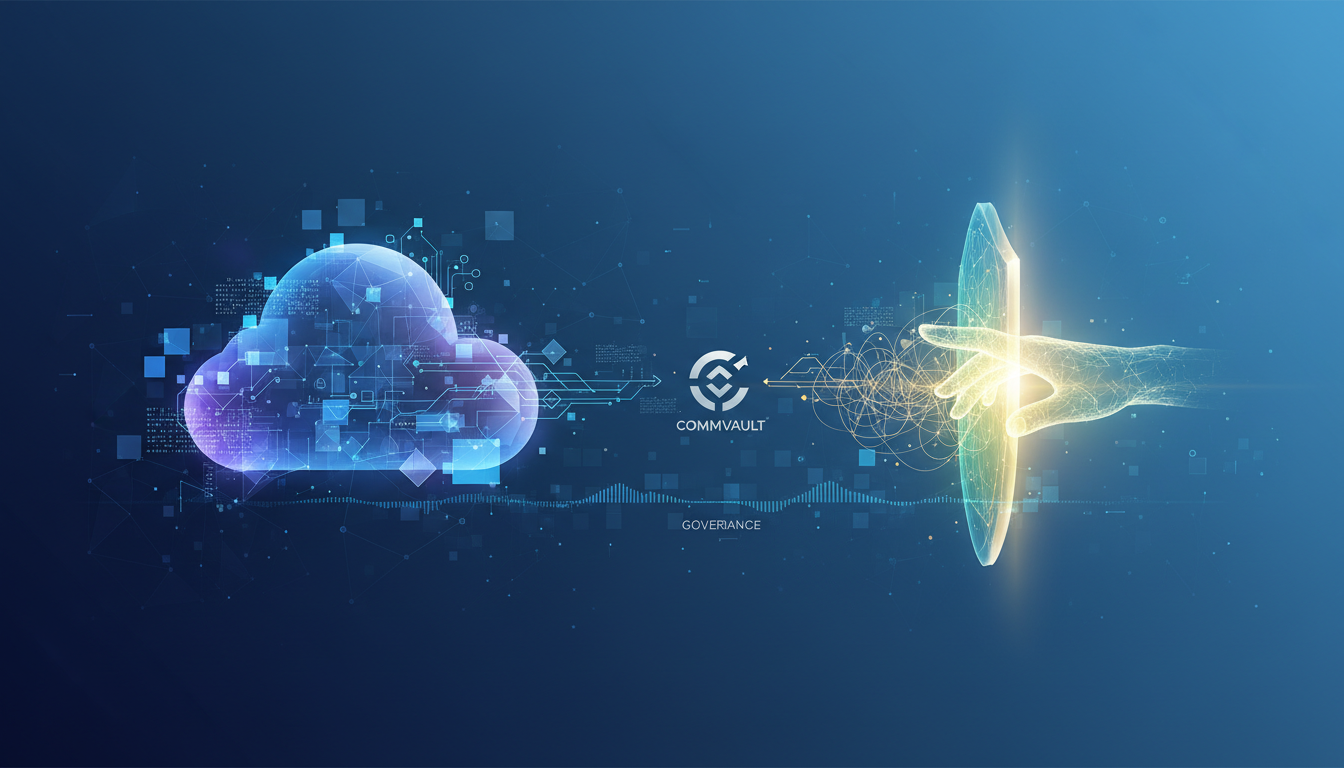
Commvault's AI Protect addresses these challenges head-on by providing an "undo" feature for AI actions in cloud environments. This innovative solution continuously scans the enterprise cloud landscape to identify active AI agents, bringing shadow AI activities into the open. By monitoring API calls and data interactions, AI Protect ensures that every action taken by an AI agent is logged and can be reversed if necessary.
The rollback capability is a critical component of AI Protect. It allows administrators to restore the environment to a previous state if an AI agent makes a mistake or misinterprets a command. This feature is particularly valuable in complex cloud infrastructures where a single misstep can trigger a cascade of unintended changes.
Bridging Traditional and Modern Governance
Traditional governance models rely on static rules and predictable user behavior. However, AI agents do not adhere to these norms, as they can combine permissions in unforeseen ways to achieve their objectives. Commvault's solution bridges this gap by integrating traditional backup architecture with continuous cloud monitoring.
By mapping the "blast radius" of an AI session, AI Protect isolates the impact of an agent’s actions. This ensures that legitimate changes made by human users during the same timeframe are preserved, preventing unnecessary rollbacks that could erase valuable work or customer transactions.
The Future of Cloud Governance
As AI continues to play a larger role in cloud operations, the need for robust governance tools becomes increasingly urgent. AI Protect represents a significant step forward in this area, providing enterprises with the ability to manage AI-driven changes effectively and safely. The solution underscores the importance of having safeguards in place to ensure that autonomous actions can be quickly and accurately reversed.
Commvault's approach highlights a new era of governance tools designed to accommodate the unique characteristics of AI agents. By focusing on transparency and control, AI Protect empowers organizations to harness the benefits of AI while minimizing the risks associated with its use.
Conclusion
The introduction of Commvault's AI Protect marks a turning point in cloud workload governance. As organizations continue to integrate AI into their operations, the ability to manage and undo AI actions becomes crucial. AI Protect not only enhances security and operational stability but also provides peace of mind, knowing that any missteps can be swiftly corrected. In doing so, Commvault is setting a new standard for cloud governance in the age of AI.
Saksham Gupta
Founder & CEOSaksham Gupta is the Co-Founder and Technology lead at Edubild. With extensive experience in enterprise AI, LLM systems, and B2B integration, he writes about the practical side of building AI products that work in production. Connect with him on LinkedIn for more insights on AI engineering and enterprise technology.