AI Revolution: Cadence's Groundbreaking Partnerships with Nvidia and Google Cloud
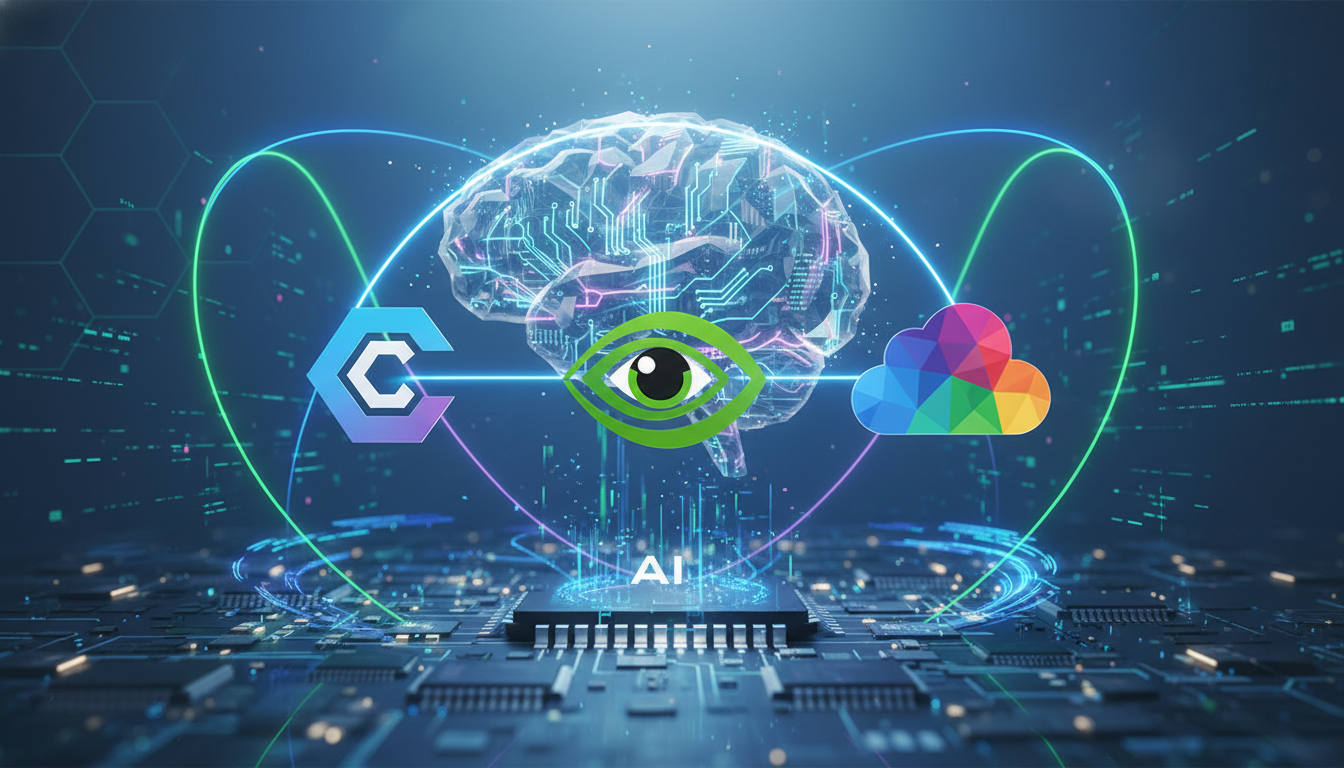
In a rapidly evolving technological landscape, Cadence Design Systems has taken a bold step forward by announcing significant partnerships with Nvidia and Google Cloud. These collaborations, unveiled during the CadenceLIVE event, signify a transformative approach to integrating artificial intelligence (AI) with engineering and design processes, paving the way for advancements in semiconductor and AI infrastructure. This article delves into the details of these partnerships and their potential impact on the industry.
Cadence and Nvidia: A Fusion of AI and Physics-Based Simulation
Cadence's collaboration with Nvidia is a strategic move aimed at enhancing the capabilities of AI in the realm of physics-based simulation. This partnership focuses on leveraging Nvidia's robust CUDA-X libraries, AI models, and Omniverse-based simulation environment to develop comprehensive solutions for robotic systems and system-level design.
By integrating these tools, Cadence aims to address the complexities of modeling and deploying semiconductors and AI infrastructure at scale. The combined platform enables engineers to simulate system behavior under real-world operating conditions, thus optimizing performance before physical deployment. This is particularly crucial in sectors where system performance heavily depends on the interplay between compute, networking, and power systems.
Moreover, the collaboration extends to robotics development. Cadence's physics engines, which model material interactions, are now linked with Nvidia’s AI models. This integration facilitates the training of AI-driven robotic systems in simulated environments, significantly reducing the need for extensive real-world data collection. The accuracy of these simulations is critical, as it directly influences the effectiveness of the AI models being trained.
Expanding Chip Design Automation with Google Cloud
In addition to its partnership with Nvidia, Cadence has also launched a new AI agent in collaboration with Google Cloud. This AI agent is designed to automate later-stage chip design tasks, specifically focusing on the physical layout processes that translate circuit designs into silicon implementations.
The integration of Cadence’s electronic design automation tools with Google’s Gemini models creates a seamless workflow for automated design and verification. By deploying these tools via Google Cloud, teams can execute complex design processes without the need for extensive on-premise infrastructure, thus enhancing scalability and reducing costs.
Cadence's ChipStack AI Super Agent platform embodies model-based reasoning, coordinating tasks across various design stages. This system not only interprets design requirements but also automates the execution of tasks, resulting in productivity gains reportedly up to tenfold in some early deployments.
Quantum Models: A New Horizon with NVIDIA Ising
In another groundbreaking announcement, Nvidia introduced the NVIDIA Ising models, a suite of open-source quantum AI models. These models are a nod to the Ising model, a mathematical framework that represents interactions in physical systems. Designed to support quantum processor calibration and error correction, the models promise up to 2.5 times faster performance and three times higher accuracy in decoding processes.
The introduction of these quantum models underscores the essential role of AI in making quantum computing practical. By serving as the control plane for quantum machines, these models transform fragile qubits into scalable and reliable quantum-GPU systems, potentially revolutionizing the field of quantum computing.
The Road Ahead: Potential and Challenges
The partnerships between Cadence, Nvidia, and Google Cloud are poised to drive significant advancements in AI, semiconductor design, and quantum computing. These collaborations highlight the increasing importance of integrating AI with traditional engineering disciplines to create more efficient, scalable, and cost-effective solutions.
However, as with any technological advancement, challenges remain. The accuracy of simulation-generated datasets, the integration of AI systems into existing workflows, and the management of large-scale data center infrastructure are all areas that require careful consideration and ongoing innovation.
Conclusion
Cadence’s collaborations with Nvidia and Google Cloud mark a pivotal moment in the AI and semiconductor industries. By harnessing the power of AI to drive innovations in simulation, chip design, and quantum computing, these partnerships have the potential to redefine industry standards and set new benchmarks for technological excellence. As these projects unfold, they will undoubtedly offer valuable insights into the future of AI-driven design and engineering, shaping the next generation of technological advancements.
Saksham Gupta
Founder & CEOSaksham Gupta is the Co-Founder and Technology lead at Edubild. With extensive experience in enterprise AI, LLM systems, and B2B integration, he writes about the practical side of building AI products that work in production. Connect with him on LinkedIn for more insights on AI engineering and enterprise technology.