Beyond Weights: Unpacking the Layers of Continual Learning for AI Agents
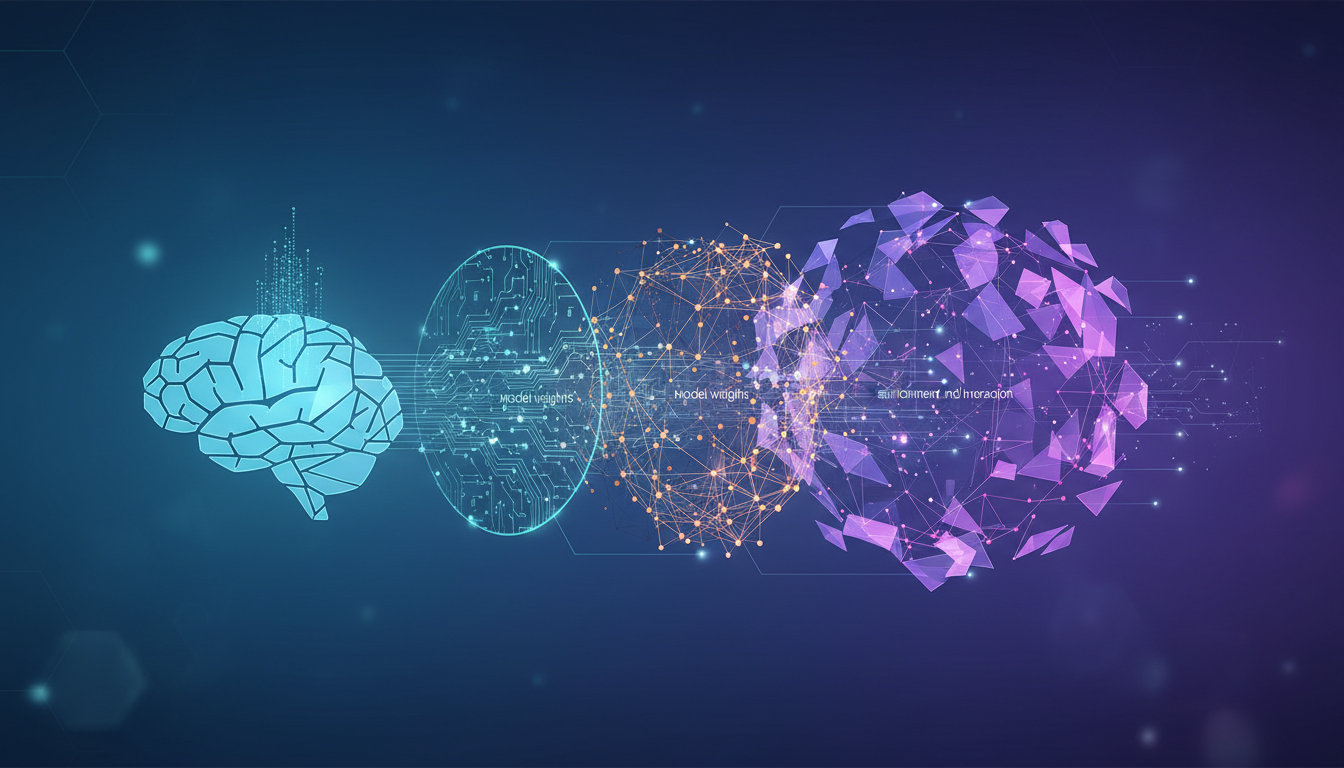
In the rapidly evolving field of artificial intelligence, continual learning is a hot topic. Traditionally, much of the focus has been on updating model weights to enable machines to learn new information over time without forgetting what they have already mastered. However, continual learning for AI agents is a more nuanced concept, with learning occurring at three distinct layers: the model, the harness, and the context. Understanding these layers is essential for building intelligent systems that can continuously improve and adapt.
The Three Layers of Agentic Systems
Continual learning involves more than just the model itself; it encompasses the entire framework that allows an AI agent to function and learn. The three main layers where learning can occur are:
Model
The model layer concerns the core of AI systems—updating the model weights. This is what most people think of when discussing continual learning. Techniques such as Supervised Fine-Tuning (SFT) and Reinforcement Learning (RL), like Gradient Policy Optimization (GRPO), are used to update these weights. One major challenge is catastrophic forgetting, where updating a model on new data can degrade its performance on previously learned tasks. While most models are trained at an agent level, there is potential for more granular approaches, such as personalized models for individual users.
Harness
The harness layer involves the code and instructions that drive the AI agent. This layer controls how the model interacts with tasks and users. Optimizing harnesses is a growing area of research, with methodologies like Meta-Harness focusing on end-to-end optimization. By running the agent over various tasks and analyzing execution logs, developers can refine harness code to improve performance. Although typically applied at the agent level, there is potential for user-specific harness optimization.
Context
The context layer represents the configurable aspects of the AI system, including instructions, skills, and tools. This layer functions like memory, allowing an agent to adapt based on external information. Context learning can occur at multiple levels, from agent-level persistent memory to tenant-specific configurations for users, organizations, or teams. Systems like OpenClaw utilize a file such as SOUL.md to update context over time. Context updates can be offline or occur in real-time, either initiated by the user or autonomously by the agent.
Continual Learning in Practice
Model-Level Learning
In practice, updating model weights is crucial for maintaining and improving an AI's performance. However, this requires careful balancing to prevent catastrophic forgetting. The industry is exploring more sophisticated solutions, such as LORA (Low-Rank Adaptation), which allow models to be updated with minimal negative impact on existing knowledge.
Harness-Level Learning
Harness optimization involves analyzing execution traces to identify improvements in the code that controls the agent's operations. Platforms like LangSmith provide tools to collect and analyze these traces, enabling developers to refine the harness and enhance the agent's efficiency. This process is pivotal for the continual evolution of AI capabilities.
Context-Level Learning
Contextual updates offer a flexible approach to AI learning, allowing for real-time adaptation. This flexibility is crucial in dynamic environments where user needs and organizational goals are constantly shifting. Context updates can be explicit, where users prompt the agent to remember certain information, or implicit, where the agent updates its memory based on predefined instructions.
The Role of Traces
Traces, or the logs of an agent's execution path, are fundamental to all three layers of continual learning. They serve as a record of the agent's actions, providing valuable insights for model training, harness optimization, and context updates. By leveraging traces, developers can monitor an agent's behavior, identify areas for improvement, and implement changes that enhance the agent's learning capabilities.
Conclusion
Continual learning for AI agents extends beyond simply updating model weights. By considering the model, harness, and context layers, developers can create systems that are more adaptable and resilient. As AI technology advances, understanding these layers will be crucial for building agents that can learn and grow autonomously in diverse environments. By harnessing the power of traces, developers can unlock the full potential of AI, ensuring that these systems continue to evolve and improve over time.
Saksham Gupta
Founder & CEOSaksham Gupta is the Co-Founder and Technology lead at Edubild. With extensive experience in enterprise AI, LLM systems, and B2B integration, he writes about the practical side of building AI products that work in production. Connect with him on LinkedIn for more insights on AI engineering and enterprise technology.