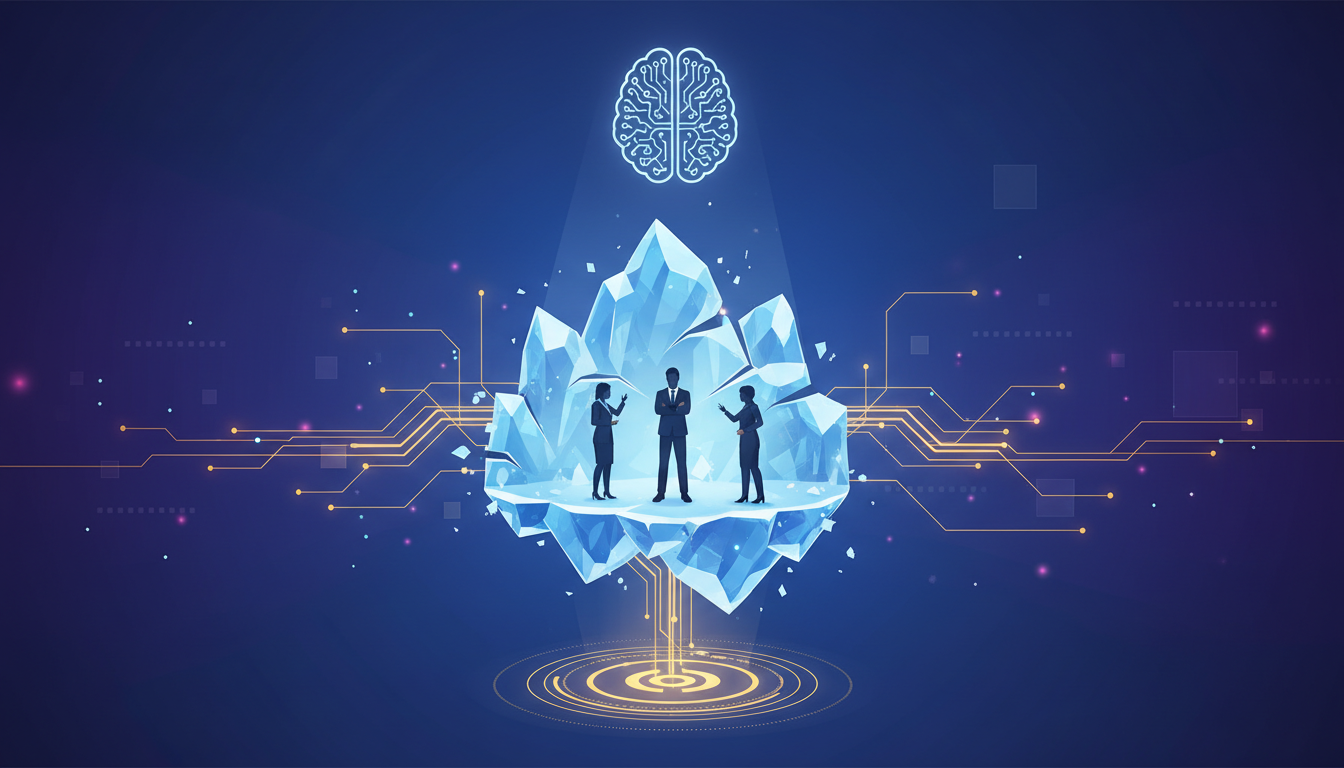
Breaking the Ice: Overcoming Middle Management's Reluctance to Embrace Enterprise AI
In the rapidly evolving landscape of enterprise technology, artificial intelligence (AI) stands as a beacon of transformative potential. While boardrooms globally have reached a consensus on the value of AI, the journey from strategic vision to operational reality often encounters an unexpected roadblock: middle management. This "frozen middle," as identified by experts, presents a unique challenge that can significantly slow down the pace of AI adoption across organizations.
The Skepticism of Middle Management
Middle management's reluctance to fully embrace AI is not a matter of doubting its efficacy. Rather, it is rooted in a pragmatic skepticism about AI's applicability within their specific operational contexts. Having experienced previous technology rollouts that promised much but delivered less, mid-level managers approach AI with cautious optimism. Their resistance is not unfounded; it reflects past lessons learned from ERP implementations, digital transformations, and cloud migrations that often fell short of their transformative promises.
The Real Challenge: Change Management
The crux of the issue lies not in the technology itself but in change management. According to studies, while a significant percentage of organizations anticipate a positive return on investment from AI, many cite change management as a primary barrier to realizing its full potential. This indicates a gap between the high-level strategic vision and the practical execution required to bring AI initiatives to fruition.
Bridging the Gap Between Vision and Execution
To successfully navigate the transition to AI-enabled operations, organizations must bridge the gap between strategic aspirations and on-the-ground execution. Future-state visioning and target operating models are essential to outline where a business desires to go. However, these models often lack the practical insights needed by middle management to confidently lead their teams through the AI transformation process.
Providing Practical Insights
Middle managers need more than just strategic end goals; they need transparency into how similar organizations are navigating AI adoption. Understanding both the successes and the challenges faced by peers can demystify the AI journey and make it feel more achievable. This sharing of real-world experiences, including missteps and incremental progress, can foster a sense of confidence and reduce resistance.
Engaging Middle Management Effectively
For AI adoption to be successful, it is crucial to engage middle management by addressing their concerns and involving them in the transition process. Organizations should focus on three core priorities:
-
Acknowledging Skepticism: Recognize and validate the concerns of middle management rather than dismissing them. This validation can transform skepticism into constructive dialogue.
-
Providing Peer Insights: Offer visibility into how peer organizations are implementing AI. This comparative perspective can provide actionable insights and reduce uncertainty.
-
Focusing on Operational Change: Present AI not just as a technological upgrade but as a fundamental change in operating models. This approach aligns AI initiatives with the core of business operations, making them more relevant to managers' day-to-day responsibilities.
Aligning Vision with Execution
The path to effective AI adoption lies in aligning strategic vision with practical execution. It requires an organization-wide effort that integrates the insights and experiences of middle management into the broader strategy. By doing so, companies can transform the so-called "frozen middle" from a barrier into a bridge, facilitating a smoother transition to AI-driven operations.
Conclusion
The enterprises that will lead in AI adoption are those that understand the importance of engaging their entire organizational structure in the process. Rather than exerting top-down pressure, these companies will focus on creating a cohesive environment where vision and execution are aligned. By addressing the unique challenges faced by middle management, organizations can unlock the full potential of AI and drive meaningful transformation across their operations.
Saksham Gupta
Founder & CEOSaksham Gupta is the Co-Founder and Technology lead at Edubild. With extensive experience in enterprise AI, LLM systems, and B2B integration, he writes about the practical side of building AI products that work in production. Connect with him on LinkedIn for more insights on AI engineering and enterprise technology.