Bridging the Gap: From AI Deployment to Production Accountability in Enterprises
In the rapidly evolving landscape of artificial intelligence, enterprises are increasingly integrating AI into their operations. Yet, a significant challenge remains: transitioning from AI deployment to genuine production accountability. This gap between deployment and production readiness is a critical hurdle for many organizations striving to harness AI's full potential.
Deployment Versus Production
The distinction between deploying AI models and operating them in production is not merely semantic. Deployment signifies that AI systems are in place, but production readiness implies a level of accountability that many enterprises have yet to achieve. Accountability involves meeting service-level expectations, establishing governance frameworks, ensuring auditability, and possessing the ability to intervene when systems fail. These are standards that most enterprise AI systems are currently struggling to meet.
The Visibility and Risk Challenges
A fundamental issue hindering AI's progression from deployment to production is visibility. Many enterprises lack the tools to track who uses AI, where it's deployed, and how costs are scaling. This lack of visibility can lead to uncontrolled expansion and unforeseen expenses, undermining the strategic benefits of AI.
Another pressing challenge is risk management. AI systems, by their nature, are probabilistic rather than deterministic. This means they can produce results that are not entirely predictable, leading to potential compliance issues and data privacy breaches. Enterprises must grapple with defining acceptable error rates and managing risks associated with AI hallucinations and data leakage.
The AI Control Plane: A Structural Solution
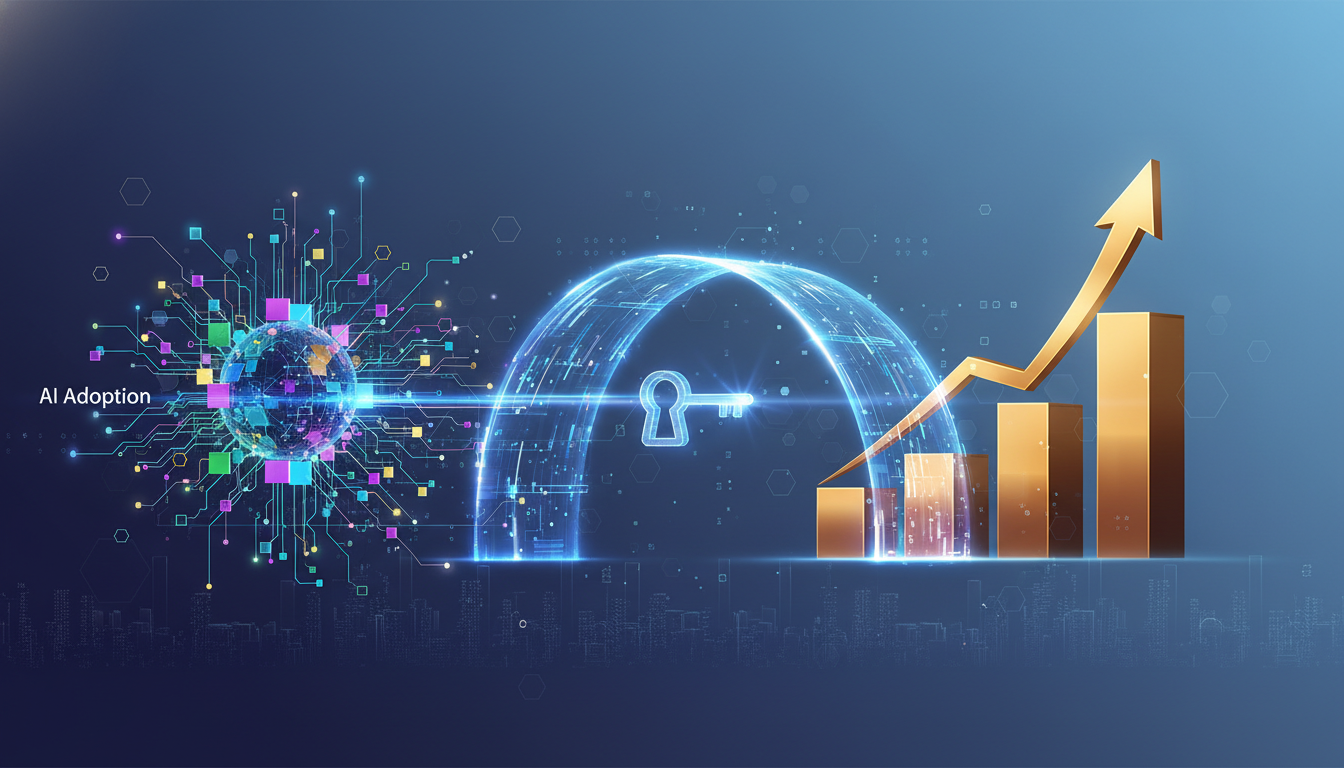
As AI systems scale, enterprises are recognizing the necessity of imposing structure through an AI control plane. This is not a standalone product but a coordinating layer that provides visibility into AI usage and costs, enforces policies, and governs the deployment of models and applications. By centralizing control, enterprises can better manage the proliferation of AI projects and reduce the occurrence of "shadow AI," where usage grows without oversight.
The challenge, however, is to maintain a balance between control and innovation. Enterprises desire the flexibility to experiment with various models and tools without being constrained to a single provider. Achieving this balance requires a nuanced approach that supports multiple models while still enforcing necessary controls.
Agents and the Accountability Dilemma
The evolution of AI systems introduces new complexities, particularly with the emergence of AI agents. Unlike traditional AI models, agents execute tasks and interact with systems on behalf of users. This capability raises significant accountability questions. For instance, if an AI agent acts on incorrect guidance, who is responsible for the outcome?
Defining the identity and permissions of AI agents is crucial. Enterprises must establish clear boundaries for agent actions and determine when human intervention is necessary. This includes assigning ownership to ensure that responsibility does not become ambiguous, especially when system outputs lead to human errors.
Continuous Evaluation and Adaptation
Unlike traditional systems, AI models can drift over time, altering their behavior and potentially impacting outcomes. It is imperative for enterprises to implement continuous evaluation mechanisms to monitor and assess AI performance. This ongoing assessment allows organizations to identify drifts and take remedial action promptly, ensuring that AI systems remain aligned with business objectives and compliance requirements.
Conclusion
The path from AI deployment to production accountability is fraught with challenges, but it is a journey that enterprises must undertake to fully leverage AI's potential. By addressing visibility and risk, establishing a robust AI control plane, and navigating the complexities of AI agents, organizations can bridge the gap and transform AI from a deployed tool into a reliable, accountable production system. Continuous evaluation and adaptation will be key to sustaining this transformation, ensuring that AI systems deliver value while mitigating risks in an ever-changing landscape.
Saksham Gupta
Founder & CEOSaksham Gupta is the Co-Founder and Technology lead at Edubild. With extensive experience in enterprise AI, LLM systems, and B2B integration, he writes about the practical side of building AI products that work in production. Connect with him on LinkedIn for more insights on AI engineering and enterprise technology.