Building the Future: Why AI Agents Must Have Robust Interaction Infrastructure
In the rapidly evolving realm of artificial intelligence, the deployment of AI agents in corporate environments is no longer a speculative endeavor but an operational reality. These autonomous entities are taking on more significant roles, managing crucial tasks from customer support to security operations. However, as these intelligent agents proliferate, the need for a robust interaction infrastructure becomes increasingly critical. This infrastructure is essential to ensure seamless communication, maintain operational efficiency, and avoid the financial pitfalls associated with unmanaged automation.
The Necessity of an Interaction Infrastructure
The move towards autonomous systems in enterprises is driven by their potential to enhance efficiency and decision-making processes. Yet, as these agents begin to operate independently across diverse cloud environments, the fragility of their interaction framework becomes apparent. Without a structured interaction layer, human operators are often forced to intervene, acting as the connective tissue between disparate systems. This manual intervention not only hampers efficiency but also introduces potential points of failure.
Enterprises must deploy a dedicated interaction infrastructure that governs how AI agents interact. This infrastructure acts similarly to the service meshes used in microservices, providing a stable platform for communication between these autonomous entities. By establishing this layer, organizations can prevent the degradation of their operational frameworks and reduce the need for constant human oversight.
Market Dynamics and the Heterogeneous Environment
The enterprise landscape is inherently heterogeneous, characterized by varied frameworks, competing cloud platforms, and distinct communication protocols. This fragmentation is not merely a temporary state but the ongoing reality of modern business operations. As such, a robust interaction infrastructure must accommodate this diversity, providing a unified framework that allows for seamless collaboration between different AI systems.
Initiatives like the Model Context Protocol (MCP) offer a glimpse into the future, providing models with a standardized method for accessing tools and resources across platforms. However, while these protocols establish the groundwork for communication, they do not manage the complexities of the production environment, such as routing, error recovery, and authority boundaries. A dedicated interaction layer is necessary to fill this gap, ensuring reliable operations and preventing costly errors.
The Financial Implications of Unmanaged Automation
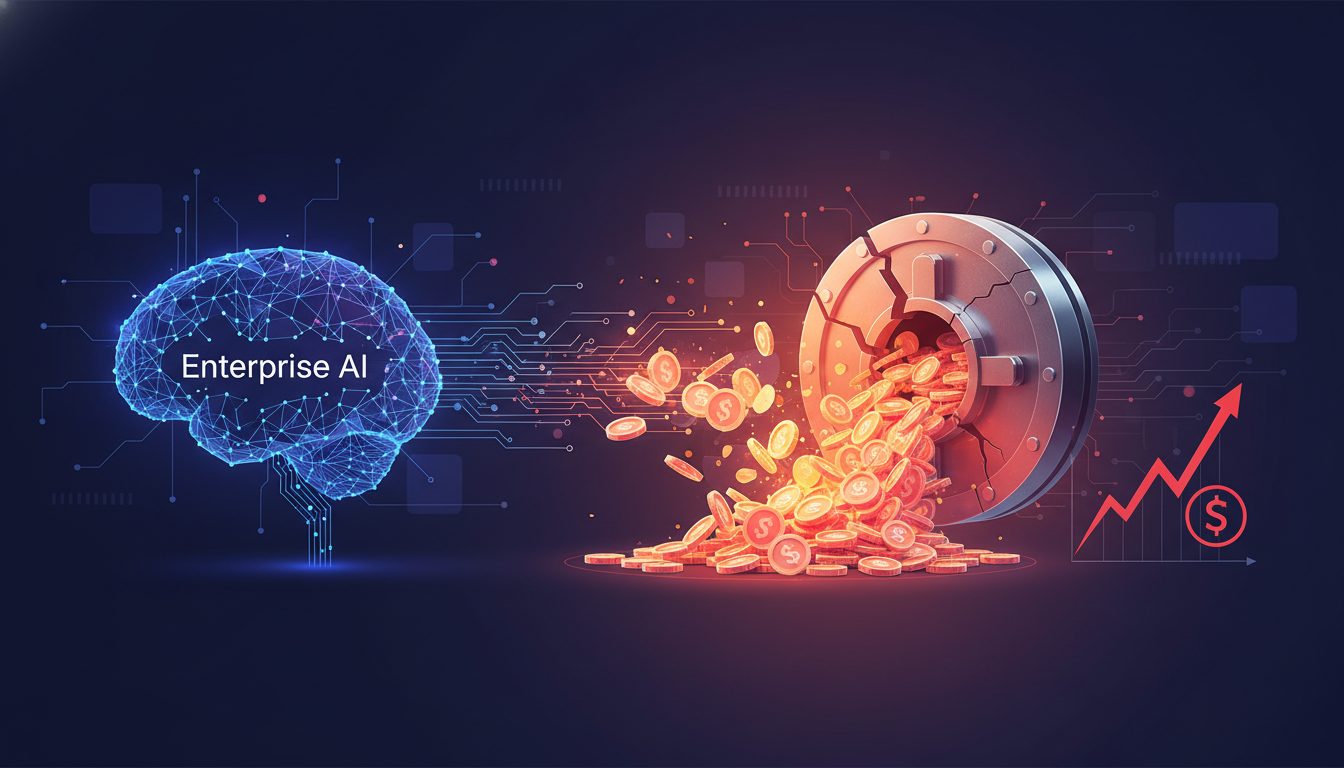
The financial risks of deploying AI agents without a robust interaction infrastructure are significant. Independent models often require continuous API calls to expensive large language models, leading to ballooning compute expenses. A failure in routing or a looping error between confused entities can quickly escalate costs, consuming substantial cloud budgets in a short period.
Moreover, autonomous workflows, if left unmanaged, can lead to unpredictable financial liabilities. For instance, an unmonitored negotiation between procurement and vendor models might trigger excessive inference cycles, inflating token usage costs. To mitigate these risks, the interaction infrastructure must include financial circuit breakers, terminating interactions that exceed predefined computational thresholds.
Securing the Communication Mesh
The interaction infrastructure also plays a crucial role in securing enterprise operations. As AI agents integrate with legacy systems, the risk of data corruption and contamination increases. Without a hardened interaction layer, conflicts between models can lead to database locks or conflicting entries, jeopardizing data integrity.
A secure communication mesh allows organizations to enforce specific access controls and trace the lineage of shared information, preventing data degradation. By establishing this mesh as a security perimeter, enterprises can maintain strict governance over data exchanges, ensuring compliance with regulatory standards and avoiding potential penalties.
Governance and the Role of Human Oversight
Governance is at the heart of a successful interaction infrastructure. The platform must reject the notion of a monolithic model managing the enterprise and instead support a network of specialized participants operating in sync. This approach requires integrating governance controls at the same infrastructure level as collaboration mechanisms.
Human oversight remains vital, serving as an integral part of the execution layer. By embedding governance deeply into the interaction infrastructure, organizations can inspect delegation chains, enforce authority limits, and maintain comprehensive audit trails. This foundation of trust and transparency is essential for scaling operations and achieving long-term success in the autonomous enterprise landscape.
In conclusion, as enterprises embrace AI agents, the need for a robust interaction infrastructure becomes paramount. By investing in this foundational layer, organizations can ensure reliable, efficient, and secure operations, setting the stage for a future where AI-driven processes seamlessly integrate into the corporate fabric.
Saksham Gupta
Founder & CEOSaksham Gupta is the Co-Founder and Technology lead at Edubild. With extensive experience in enterprise AI, LLM systems, and B2B integration, he writes about the practical side of building AI products that work in production. Connect with him on LinkedIn for more insights on AI engineering and enterprise technology.