Harnessing AI: The Future of Forex Trading Bots
The Evolution of Forex Trading Bots
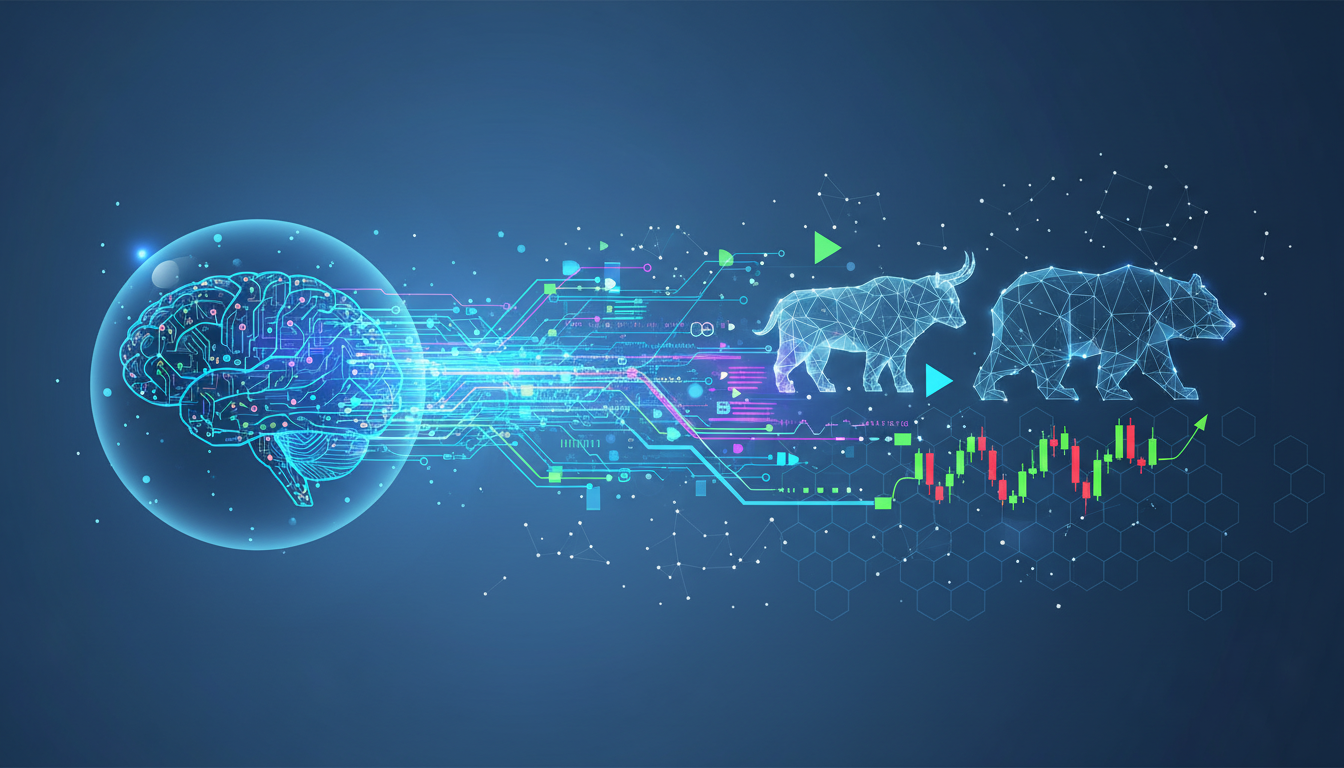
Forex trading, a domain once dominated by human intuition and experience, is increasingly being reshaped by artificial intelligence (AI). The financial markets, with their relentless pace and vast data streams, have found a new ally in AI-powered forex bots. These automated systems have evolved from rigid, rule-based algorithms to sophisticated tools capable of analyzing complex market dynamics and making informed trading decisions.
In the past, forex robots relied heavily on static strategies, executing trades based on predefined rules such as moving averages or price thresholds. However, such systems often struggled to keep pace with market fluctuations and unexpected economic events. Today, AI has introduced a level of adaptability and intelligence that allows these bots to thrive in the ever-changing landscape of currency trading.
From Rule-Based Automation to Intelligent Systems
The transition from simple automation to AI-driven systems marks a significant shift in forex trading. Traditional robots depended on a set of fixed rules, which limited their ability to react to new market conditions. AI, on the other hand, leverages machine learning to analyze historical data and discern intricate relationships between various market factors. This capability enables trading systems to adapt their strategies as new information becomes available, enhancing their effectiveness.
Some of the key differences between traditional and AI-driven forex robots include:
- Data-driven learning: AI models train on extensive datasets, identifying patterns without relying solely on hard-coded rules.
- Adaptability: These systems can modify their strategies in response to new data, allowing for greater flexibility.
- Pattern recognition: AI excels at detecting subtle correlations that might elude traditional algorithms.
- Continuous improvement: Regular retraining allows these models to evolve with market dynamics.
These enhancements have significantly broadened the scope of what automated trading systems can achieve.
Core AI Technologies in Forex Robots
A variety of AI technologies are now integral to modern forex trading systems, each contributing uniquely to market analysis and decision-making. Some of the most common include:
- Machine Learning Models: These are used to analyze historical currency data, identifying patterns and generating predictive signals.
- Natural Language Processing (NLP): NLP enables trading systems to interpret financial news and reports, gauging sentiment shifts that could impact currency prices.
- Deep Learning Architectures: With their multi-layer neural networks, these systems can evaluate complex interactions between technical indicators and market movements.
- Reinforcement Learning: Through a trial-and-error approach, these algorithms refine strategies based on trading outcomes, learning from rewards and penalties.
By integrating these technologies, forex robots can efficiently process large volumes of information and respond to market changes with agility.
Enhancing Risk Management and Decision Making
AI's role in enhancing risk management is one of its most valuable contributions to forex trading. Currency markets are inherently volatile, and managing risk is a critical component of successful trading. AI-driven systems are equipped to monitor multiple factors concurrently, assessing price movements, volatility, liquidity changes, and correlations between currency pairs. This comprehensive view enables automated systems to identify potential risks more effectively than traditional methods.
For instance, AI-based trading tools can:
- Analyze spikes in volatility that might signal unstable market conditions.
- Detect unusual correlations between currency pairs.
- Adjust position sizes based on real-time risk assessments.
- Automatically exit trades when risk thresholds are exceeded.
These capabilities make AI-powered forex bots indispensable for traders seeking efficiency and enhanced decision support.
Challenges and Considerations
Despite their advantages, AI-driven forex robots are not without challenges. Market behavior can be unpredictable, particularly during unforeseen economic or geopolitical events. Several key considerations must be addressed when utilizing AI-based trading systems:
- Data Quality: The accuracy of machine learning models is contingent on high-quality, well-structured datasets.
- Overfitting Risks: Models overly trained on historical data may excel in testing but falter in live market conditions.
- Regulatory Oversight: As algorithmic trading becomes more prevalent, regulators are scrutinizing its impact on currency markets.
- Human Supervision: Even the most advanced systems benefit from ongoing monitoring and adjustments.
Acknowledging these limitations is crucial for traders and developers aiming to maximize the effectiveness of AI tools.
The Future of AI in Forex Trading
Artificial intelligence is poised to further transform forex trading. Advances in machine learning, data processing, and computing power are continually enhancing the capabilities of automated trading systems. Developers are exploring hybrid AI models that combine various learning techniques to boost predictive accuracy. As these technologies evolve, the integration of broader data sources, including global economic indicators and cross-market signals, is likely to enrich trading strategies.
While human expertise remains invaluable, the role of intelligent automation in currency trading is expanding. As AI technology progresses, its influence on the forex market will undoubtedly grow, promising a future where automated systems play an even more pivotal role in trading decisions.
Saksham Gupta
Founder & CEOSaksham Gupta is the Co-Founder and Technology lead at Edubild. With extensive experience in enterprise AI, LLM systems, and B2B integration, he writes about the practical side of building AI products that work in production. Connect with him on LinkedIn for more insights on AI engineering and enterprise technology.