Navigating the Build vs Buy AI Landscape: A 2026 Guide for Enterprises
Introduction
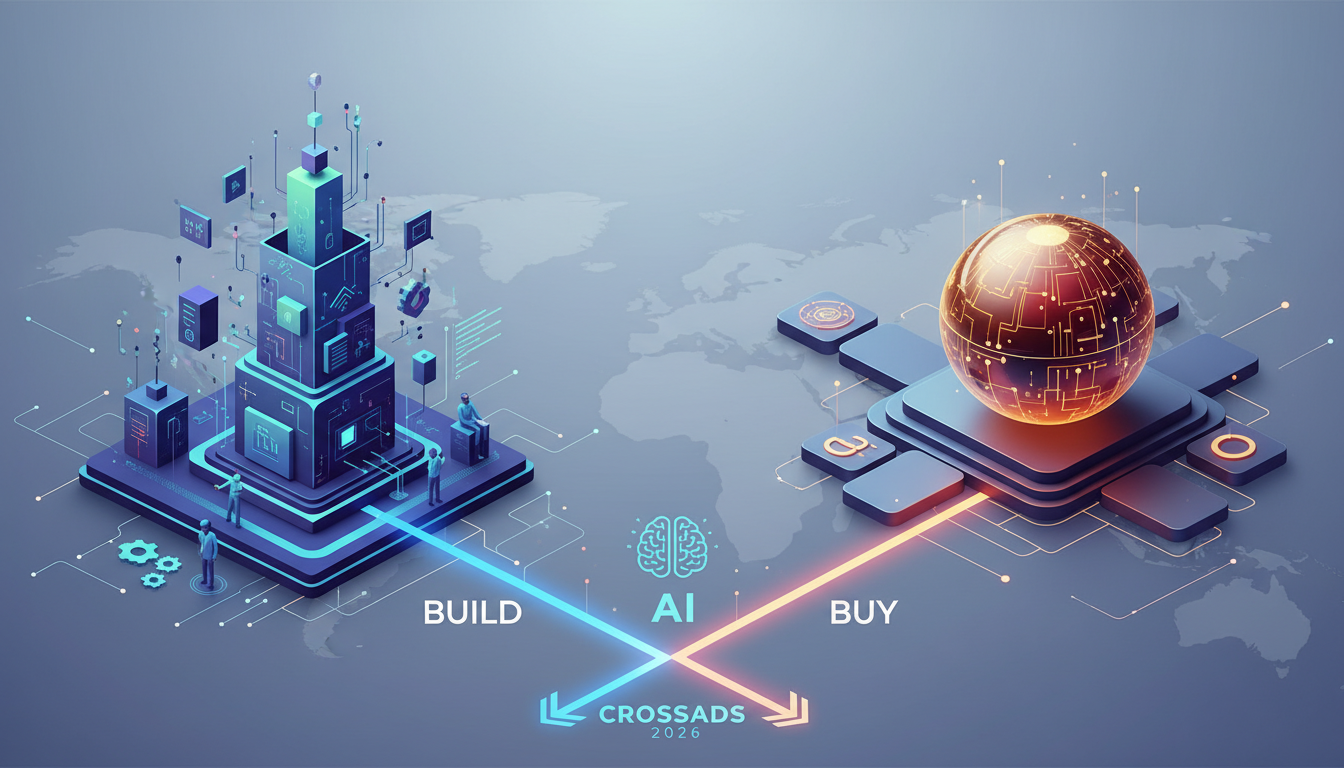
The decision of whether to build or buy AI solutions has become a pivotal consideration for enterprises in 2026. As AI technologies have matured, they have moved beyond experimental stages to become integral components of business operations. The choice between building AI systems in-house or purchasing them from vendors involves critical strategic trade-offs—affecting cost, control, and competitive advantage.
In this guide, we will delve into the factors driving the build vs buy AI debate, explore the rise of hybrid AI strategies, and offer a framework for making informed decisions that align with business objectives.
Why the Build vs Buy AI Debate Matters More Than Ever in 2026
The Shift to Enterprise-Scale AI
In the past, AI initiatives were primarily exploratory. Today, AI systems are embedded within enterprise processes, influencing everything from customer interactions to supply chain management. This shift highlights the importance of choosing the right AI deployment strategy, as these systems now play a critical role in driving revenue and enhancing customer experience.
Rising Complexity of AI Architectures
Modern AI architectures are complex and require expertise across various domains, including data engineering and machine learning operations (MLOps). Enterprises often struggle with the intricacies of building AI systems, leading to delays and increased costs. As a result, the build vs buy decision has become a board-level priority.
Increased Regulatory and Governance Pressure
With AI's growing influence comes heightened regulatory scrutiny. Enterprises must navigate data privacy regulations, model explainability requirements, and industry-specific compliance mandates. Buying AI platforms can offer built-in compliance capabilities, whereas building requires developing governance frameworks from scratch.
The Case for Building AI In-House: Control, Differentiation, and Ownership
Full Control Over AI Architecture and Data
Building AI systems in-house provides enterprises with unmatched control over their architecture and data pipelines. This is crucial for industries like finance and healthcare, where data sensitivity and regulatory requirements are paramount.
Competitive Differentiation Through Proprietary AI
Enterprises that possess unique data assets often opt to build AI systems to create competitive differentiation. Proprietary AI capabilities, such as personalized recommendation engines or intelligent logistics systems, can become core business differentiators.
Ownership of Intellectual Property
Building AI internally ensures ownership of models, algorithms, and data pipelines, reducing dependency on vendors and allowing for potential monetization through patents and licensing.
The Case for Buying AI: Speed, Scalability, and Enterprise Readiness
Accelerated Time-to-Value
Buying AI solutions offers rapid deployment and faster ROI. Prebuilt models and APIs enable enterprises to launch AI initiatives within weeks, providing a competitive edge in fast-paced markets.
Lower Initial Investment
Purchasing AI platforms shifts investment from capital to operational expenditure, reducing upfront costs and making financial planning more predictable.
Built-In Scalability and Security
AI platforms are designed for scalability and often come with enterprise-grade security features, crucial for handling high transaction volumes and ensuring data privacy.
The Rise of Hybrid AI: Beyond Build vs Buy
From Binary Decisions to Strategic Composability
The hybrid AI approach combines the best of both worlds, allowing enterprises to use prebuilt platforms for common capabilities while customizing domain-specific components internally. This strategy supports modular innovation and aligns with modern architectural principles.
Strategic Advantages of Hybrid AI
Hybrid AI offers a balanced approach, optimizing costs and performance while maintaining control over sensitive components. It provides flexibility to adapt to new technologies and evolving business needs.
A Practical Decision Framework for Build vs Buy AI
Key Factors to Consider
- Time-to-Value Requirements: Urgent needs may favor buying, whereas long-term capability building may justify building.
- Data Sensitivity and Compliance: Highly regulated data may necessitate building or a hybrid approach.
- Internal Capabilities: Strong AI/ML teams can support building or hybrid strategies.
- Strategic Importance: Core business differentiators often require building.
- Integration Complexity: Hybrid approaches suit complex legacy systems, while cloud-native environments may benefit from buying.
Conclusion
The build vs buy AI decision in 2026 transcends a simple binary choice. It requires a strategic assessment of enterprise priorities, capabilities, and goals. Hybrid strategies, which combine the agility of buying with the control of building, are emerging as the preferred approach, offering a versatile pathway to AI-driven innovation.
As AI continues to evolve, enterprises must remain agile, leveraging strategic partnerships and continuously reassessing their approach to maintain a competitive edge in an ever-changing landscape.
Saksham Gupta
Founder & CEOSaksham Gupta is the Co-Founder and Technology lead at Edubild. With extensive experience in enterprise AI, LLM systems, and B2B integration, he writes about the practical side of building AI products that work in production. Connect with him on LinkedIn for more insights on AI engineering and enterprise technology.