Rethinking Resilience: How Geopolitics and Power Limits Are Shaping the Future of AI Data Centers
The Growing Challenges for AI Data Centers
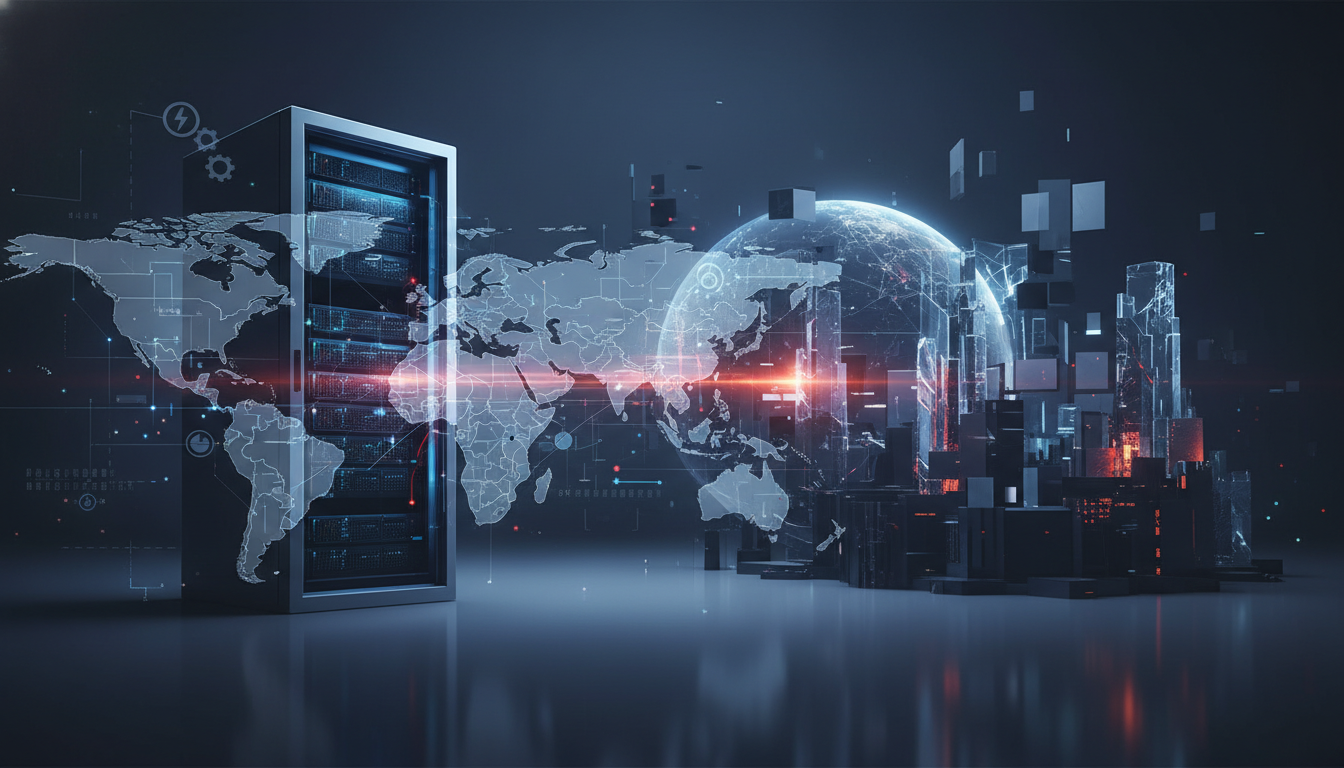
In today's rapidly evolving technological landscape, the deployment of AI data centers is encountering unprecedented challenges. The convergence of escalating power demands, geopolitical instability, and evolving insurance landscapes is compelling enterprises to reassess their strategies for deploying AI workloads. The recent disruptions in the Middle East serve as a stark reminder of the fragility of current data center infrastructures and the urgent need for a more resilient approach.
Surging Power Demands Strain the Grid
The exponential growth of AI workloads has driven a surge in data center electricity consumption. From 2024 to 2025, consumption soared by 73%, primarily due to AI processes. For instance, training sophisticated AI models like OpenAI's GPT-4 required energy equivalent to several days' electricity consumption of major cities. This relentless demand for power has pushed traditional grids, particularly in the United States, to their limits.
Northern Virginia, a hub for U.S. data centers, epitomizes this strain with significant delays in grid connections. The bottleneck is no longer a question of funding but a structural issue that threatens to stall new projects indefinitely. As a result, enterprises are facing intensified competition for limited data center space, driving up prices and complicating expansion strategies.
The New Geopolitical Landscape
The events of March 2026, when Iranian drones targeted Amazon Web Services data centers in the UAE and Bahrain, have irrevocably altered how companies view geopolitical risks. These strikes, which caused widespread outages and operational disruptions, highlighted the vulnerability of data centers located in geopolitically volatile regions. Enterprises that once prioritized cost and performance in location decisions now must consider geopolitical stability as a critical factor.
The ramifications extend to insurance coverage as well. Traditional policies often exclude acts of war, leaving companies exposed to significant financial risks in the event of military-related disruptions. This has necessitated a revision of risk assessments, with enterprises now demanding more comprehensive insurance solutions and risk-sharing agreements with their data center providers.
Strategies for Resilience and Diversification
In response to these challenges, enterprises are adopting strategies centered on geographic diversification. By distributing workloads across multiple regions, companies can mitigate the impact of localized disruptions. The case of Snowflake, which successfully recovered from outages by shifting operations to alternate locations, underscores the importance of this approach.
Countries like Mexico are emerging as attractive alternatives for AI data center deployment, offering proximity to the U.S. and favorable latency conditions. Meanwhile, India continues to draw interest due to its growing data center capacity and governmental incentives, despite ongoing trade tensions.
The Shift in Vendor Relationships
The current climate is prompting a fundamental shift in how enterprises interact with their data center vendors. Companies are increasingly scrutinizing providers' geopolitical risk assessments and demanding contractual provisions that address potential disruptions. These include clauses for tariff pass-throughs, phased capacity commitments, and force majeure provisions specifically tailored to geopolitical events.
Major cloud service providers are also responding to these dynamics by diversifying their infrastructure investments. Microsoft's significant investment in Malaysia and Google's strategic realignment away from the Middle East are indicative of a broader trend toward reducing dependency on high-risk regions.
The Competitive Edge of Resilient Infrastructure
As the landscape for AI data centers continues to evolve, enterprises that proactively embrace a distributed, resilient infrastructure will gain a significant competitive advantage. This advantage is not merely operational but extends to customer confidence and brand reputation. Companies that can assure uninterrupted service, even in the face of geopolitical and grid-related challenges, will likely outperform less prepared competitors.
In conclusion, the future of AI data centers hinges on enterprises' ability to navigate these complex challenges. By prioritizing resilience and diversification, companies can secure their operations against the uncertainties of power limits and geopolitical risks, ensuring their continued growth and success in an increasingly interconnected world.
Saksham Gupta
Founder & CEOSaksham Gupta is the Co-Founder and Technology lead at Edubild. With extensive experience in enterprise AI, LLM systems, and B2B integration, he writes about the practical side of building AI products that work in production. Connect with him on LinkedIn for more insights on AI engineering and enterprise technology.