The Rise of Ace: How Sony's AI Robot Dominates the Table Tennis Arena
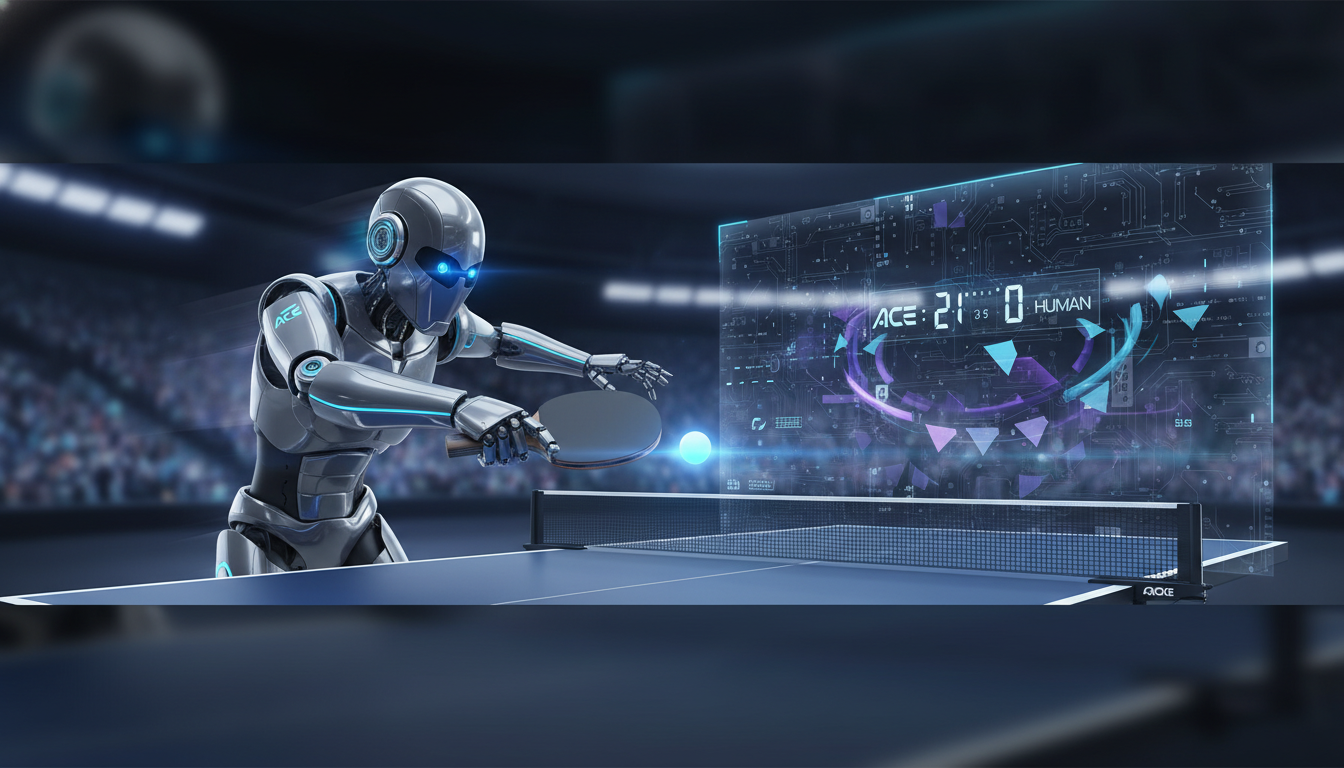
In a world increasingly driven by technological innovation, artificial intelligence continues to break new ground. One of the most intriguing developments in this field is Sony's AI-powered robot, Ace, which has begun to capture attention by excelling in the fast-paced sport of table tennis. This achievement not only highlights advances in AI but also signifies a potential shift in how we perceive and interact with technology in physical sports.
Ace: A New Contender in Table Tennis
Sony AI's Ace represents a significant leap in the application of artificial intelligence within real-world environments, specifically in competitive sports. Unlike traditional AI applications that excel in digital settings such as chess or video games where conditions are entirely simulated, Ace operates in the unpredictable and dynamic environment of table tennis. This sport requires rapid decision-making and precise motor control, making it a challenging arena for AI systems.
The design of Ace integrates high-speed perception systems with AI-driven control, enabling it to execute shots under match conditions. During trials held in 2025 and early 2026, Ace competed in matches governed by International Table Tennis Federation rules and managed to win three out of five matches against elite-level human players. This impressive performance underscores the robot's capability to match and even surpass some of the top human competitors in the sport.
Technical Marvels Behind Ace
Ace's architecture is a testament to cutting-edge AI research and engineering. The robot employs nine synchronized cameras and three vision systems to track the ball's movement and spin, processing visual data at a speed that captures motion indiscernible to the human eye. This setup enables Ace to react swiftly to the ball's trajectory, adjusting its position and shot with remarkable precision.
Moreover, Ace operates with a sophisticated set of eight joints: three manage racket positioning, two control orientation, and three regulate shot force and speed. This configuration ensures that the robot meets the mechanical requirements necessary for competitive play. Unlike many AI systems that learn from human demonstration, Ace was trained entirely in simulation. This approach allowed it to develop unique strategies, resulting in play patterns distinct from those of human opponents.
Challenges and Triumphs
Despite its successes, Ace still faces challenges, particularly regarding adaptability during matches. Professional player Mayuka Taira, who faced Ace in a match, noted the difficulty in predicting the robot's moves due to its lack of emotional cues—a factor that usually provides insight into an opponent's strategy during a game. However, Ace excels in handling complex spins and responding quickly, which are crucial skills in table tennis.
The project team at Sony AI continues to refine Ace's capabilities, focusing on enhancing its adaptability and strategic depth during matches. The ongoing improvements in Ace's design and functionality suggest that AI could soon play a more prominent role in sports, potentially even in training and strategy development for human players.
Implications Beyond Sports
The implications of Ace's success extend beyond the realm of sports. The perception and control techniques developed for Ace could be applied to various fields, such as manufacturing and service robotics. These advancements may lead to more efficient and responsive automated systems, revolutionizing industries that rely on precision and speed.
As AI continues to evolve, the success of projects like Ace demonstrates the potential for AI systems to operate in complex, real-world environments. It challenges conventional perceptions of AI's capabilities and opens up new possibilities for its application across different domains.
Conclusion
Sony's Ace is more than just a novelty in the world of competitive table tennis; it represents a significant advancement in the field of physical AI. By excelling in a sport that demands split-second decisions and precise movements, Ace has set a new standard for what AI can achieve in real-world applications. As technology continues to advance, the line between human and machine capabilities in sports and other fields may become increasingly blurred, paving the way for a future where AI is not just an assistant but a competitor in its own right.
Saksham Gupta
Founder & CEOSaksham Gupta is the Co-Founder and Technology lead at Edubild. With extensive experience in enterprise AI, LLM systems, and B2B integration, he writes about the practical side of building AI products that work in production. Connect with him on LinkedIn for more insights on AI engineering and enterprise technology.