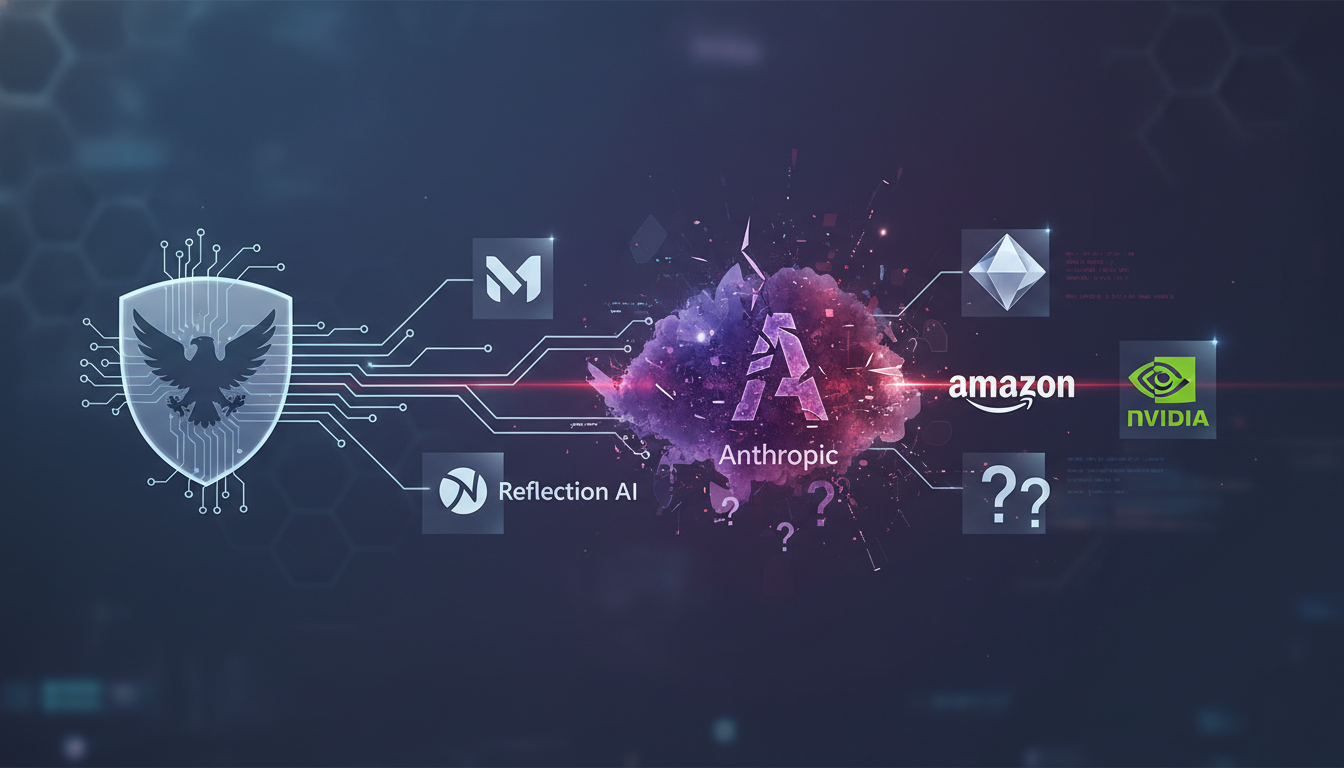
US Government Expands AI Partnerships Amid Controversy Over Anthropic's Role
Introduction
In recent developments, the US government has broadened its roster of AI suppliers, adding major industry players such as Microsoft, Reflection AI, Amazon, and Nvidia to its list of approved vendors. This move comes amidst ongoing debates surrounding the role of Anthropic, a notable player previously involved in US defense projects. As the government seeks to secure its technological edge, these new partnerships aim to diversify AI capabilities while addressing concerns over vendor reliability and ethical use.
Expanding the AI Supplier Base
The Pentagon's decision to incorporate additional AI companies marks a strategic pivot towards building a more resilient technological foundation. This expanded roster not only includes established names like Microsoft and Amazon but also newcomers such as Reflection AI, a company yet to release a publicly-available model. By diversifying its supplier base, the Department of Defense (DoD) aims to mitigate the risks associated with over-reliance on a single vendor, thereby ensuring operational stability and flexibility.
The agreements with these companies enable their products to be utilized for classified operations, a move that underscores the critical role of AI in modern defense strategies. The technologies provided will be used for tasks involving secret data and highly classified materials, augmenting the capabilities of US military forces in complex operational environments.
Controversy Surrounding Anthropic
The expansion of AI partnerships has not been without controversy, particularly concerning Anthropic's exclusion. Previously, Anthropic played a significant role in classified projects through its Claude AI, a part of Palantir’s Maven toolset. However, tensions arose over the use of Anthropic's technology, with the company's CEO, Darius Amodei, expressing concerns about potential misuse for surveillance and autonomous weaponry.
The Pentagon's decision to cancel a $200 million contract with Anthropic and label the company a "supply chain risk" has sparked legal challenges. Anthropic is pursuing claims for lost revenues, arguing that the government's actions have had a cascading effect on its business prospects. Despite these challenges, Anthropic's technology, particularly its Mythos model, remains in use by certain national security agencies, highlighting the complex interplay between technological utility and ethical considerations.
Strategic Implications
The Pentagon’s latest agreements reflect a broader strategy to prevent vendor lock-in and ensure long-term adaptability for the US defense forces. By expanding its technological base, the government seeks to insulate itself from the potential impacts of corporate policy shifts or leadership changes within individual AI companies. This strategic diversification aims to maintain the integrity of military operations, even when faced with internal or external pressures.
Moreover, the move aligns with a broader trend of governmental engagement with AI, as it seeks to leverage cutting-edge technologies to enhance national security. The inclusion of AI in defense strategies extends beyond traditional applications, offering potential for improved data synthesis, situational awareness, and decision-making support for military personnel.
Future Prospects and Ethical Considerations
As the US government forges new partnerships with AI suppliers, it continues to navigate the delicate balance between technological advancement and ethical responsibility. The controversy surrounding Anthropic serves as a reminder of the ethical implications inherent in AI deployment, particularly in areas involving surveillance and autonomous systems.
While the government emphasizes its commitment to working with frontier AI labs to protect national interests, the challenge remains to ensure that these technologies are employed in ways that align with democratic values and human rights. As AI continues to evolve, ongoing dialogue between government, industry, and civil society will be crucial in shaping a framework that upholds ethical standards while harnessing the full potential of AI.
Conclusion
The US government's expansion of AI partnerships signifies a pivotal moment in its approach to integrating advanced technologies into defense strategies. By broadening its supplier base, the Pentagon aims to enhance operational resilience and strategic flexibility. However, the controversy surrounding Anthropic underscores the need for careful consideration of ethical implications in AI deployment. As these technologies become increasingly integral to national security, the focus must remain on ensuring their responsible and ethical use.
Saksham Gupta
Founder & CEOSaksham Gupta is the Co-Founder and Technology lead at Edubild. With extensive experience in enterprise AI, LLM systems, and B2B integration, he writes about the practical side of building AI products that work in production. Connect with him on LinkedIn for more insights on AI engineering and enterprise technology.